
7 Common Mistakes That Ruin Car Accident Insurance Claims
Table of Contents
- 7 Common Mistakes That Ruin Car Accident Insurance Claims
- Mistake 1: Admitting Fault at the Scene
- Mistake 2: Delaying Medical Treatment After the Accident
- Mistake 3: Failing to Call Police or Obtain a Report
- Mistake 4: What Not to Say to Insurance Adjusters
- Mistake 5: Posting About the Accident on Social Media
- Mistake 6: Failing to Document the Scene and Gather Witness Information
- Mistake 7: Signing Settlement Offers Too Early Without Understanding Statute of Limitations
- How to Protect Your Car Accident Insurance Claim
- Frequently Asked Questions
Last Updated: September 1, 2026
7 Common Mistakes That Ruin Car Accident Insurance Claims
Getting into a car accident is stressful enough without making decisions that sabotage your ability to recover compensation. Many accident victims unknowingly undermine their claims through actions taken in the minutes and hours after a collision. At Abkarian Law Group, we’ve reviewed thousands of claims and seen how specific mistakes can dramatically reduce what insurance companies will pay, or lead to outright denials.
A single mistake can cost you thousands in lost compensation. The good news: most are entirely preventable if you know what to avoid. Below are the seven most damaging errors people make after a car accident, why each matters, and how to protect your claim from the moment it happens.
Quick Reference: The 7 Mistakes That Cost You Money
| Mistake | Immediate Impact | Long-Term Consequence |
|---|---|---|
| Admitting fault at the scene | Insurance uses your words against you | Claim denial or reduced settlement |
| Delaying medical treatment | Adjusters claim injuries aren’t serious | Lower damages award |
| No police report | Harder to prove liability | Weak claim foundation |
| Recorded statements to adjusters | Your own words undermine your case | Settlement use disappears |
| Social media posts | Evidence of inconsistency | Claim denial or investigation |
| No scene documentation or witnesses | No objective evidence of conditions | Becomes he-said-she-said |
| Signing settlement too early | You accept less than claim is worth | No recourse for additional damages |
Mistake 1: Admitting Fault at the Scene
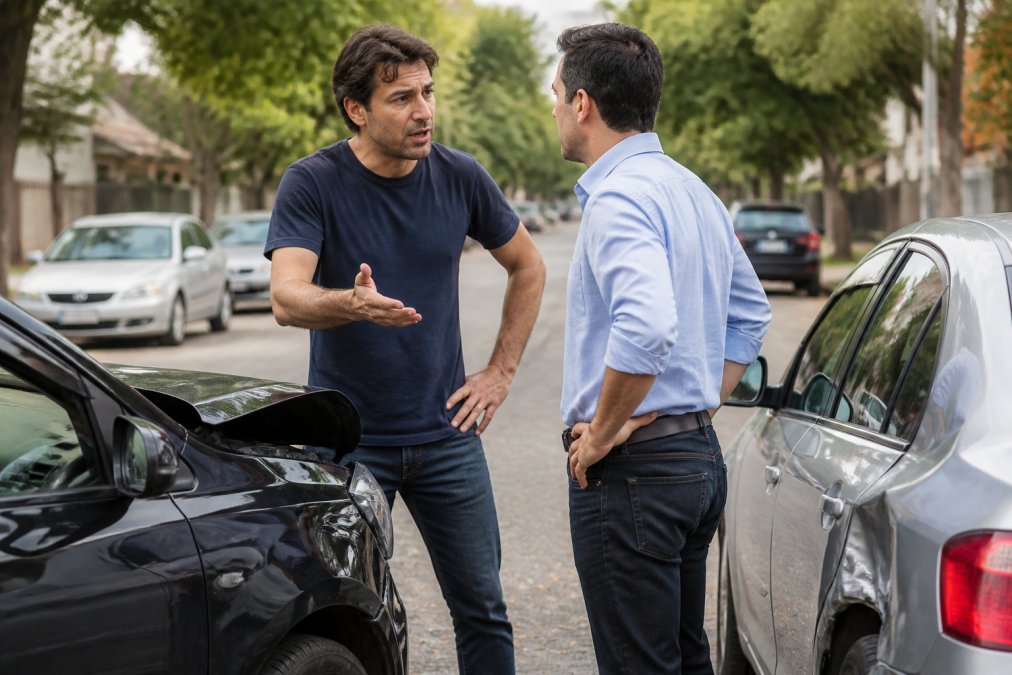
After a collision, emotions run high and instinct takes over. Many people apologize reflexively, “I’m so sorry,” “That was my fault”, without considering the legal implications. These statements become the foundation for the insurance adjuster’s liability determination.
Admitting fault at the scene is a documented admission. If a witness hears it, if a police officer notes it, or if the other driver testifies to it later, that admission becomes evidence. Insurance adjusters will use your own words to argue you bear responsibility, which directly reduces compensation under comparative negligence laws.
Comparative negligence determines who pays for damages. Even if you’re 60% at fault, you may recover 40% of damages (peer-reviewed research). But if you’ve admitted full responsibility at the scene, the insurance company will argue you should recover nothing.
What to do instead: Stay calm and say nothing about fault. Stick to factual statements only: “The other vehicle was in my lane” or “I had the green light.” Do not apologize or speculate about what caused the accident. If questioned, say “I need to speak with my attorney before discussing this.”
Mistake 2: Delaying Medical Treatment After the Accident
You feel fine. No obvious injuries. You decide to wait a few days to see if pain develops before seeing a doctor. This is one of the most costly mistakes accident victims make.
When you delay medical treatment, the adjuster’s narrative becomes simple: if your injuries were serious, you would have sought treatment immediately (the NIH). The gap between the accident and your first medical visit gives adjusters ammunition to argue your injuries are minor or unrelated to the collision.
This is especially damaging in personal injury claims, where medical records are the primary evidence linking the accident to your injuries. Without contemporaneous medical documentation, you’re fighting to prove causation.
What to do instead: Seek medical evaluation immediately after the accident, even if you feel okay. Some injuries, whiplash, internal bleeding, concussions, don’t present symptoms right away. A doctor can document baseline injuries and create a medical record establishing causation. This single step dramatically strengthens your claim.
Mistake 3: Failing to Call Police or Obtain a Report
Not every accident results in a police report. Both drivers may agree to exchange information and handle it through insurance. This seems convenient but weakens your claim significantly.
A police report is an objective third-party document including the officer’s observations about road conditions, vehicle damage, witness statements, and preliminary liability assessment (the CDC). Insurance adjusters weight police reports heavily because they come from a neutral source. Without one, your claim rests entirely on your version versus the other driver’s.
Comparative negligence determinations depend on clear evidence of how the accident happened. Without a police report, you’re missing key documented evidence.
What to do instead: Always call police after a car accident, even if damage appears minor. Request a police report number and obtain a copy. If police decline to file a report, document this in writing with the time and date, then file a supplemental report through the police department’s non-emergency line.
Mistake 4: What Not to Say to Insurance Adjusters
The insurance adjuster calls and asks for a recorded statement. You think cooperating will help your claim move faster. You answer detailed questions about what happened and how you felt.
What you don’t realize: the adjuster is trained to ask questions designed to undermine your claim. Every recorded statement is permanent documentation that can be used against you in settlement negotiations or court testimony. Adjusters will probe for inconsistencies and create opportunities for you to contradict yourself later.
You are not legally obligated to give a recorded statement to the other party’s insurance company. Giving one voluntarily puts you at a strategic disadvantage.
What to do instead: Politely decline to give a recorded statement to the other party’s insurance adjuster. You can provide basic information (name, policy number, date of accident), but say: “I’m not able to provide a recorded statement at this time. Please send any requests for information to my attorney.” This protects you from making statements that could be twisted later.

Mistake 5: Posting About the Accident on Social Media
You post on Facebook: “Just got hit by some idiot in a red sedan. My back is killing me.” Hours later, you post a photo at a restaurant with friends, smiling. The next day, you tweet about going to the gym.
The insurance adjuster sees all of this. They screenshot your posts and build a narrative: your injuries aren’t serious enough to prevent socializing and exercising. The inconsistency between “my back is killing me” and your gym visit becomes evidence of dishonesty.
Social media discovery has become standard practice in insurance claims. Adjusters routinely review profiles to find evidence contradicting injury claims.
What to do instead: Don’t post anything about the accident on social media. Don’t discuss your injuries, share photos, or post activities that could contradict injury claims. Set your profile to private and avoid posting anything related to the accident or your health for several months.
Mistake 6: Failing to Document the Scene and Gather Witness Information
You’re at the accident scene. Your adrenaline is pumping. You exchange information and leave without taking photos or writing down witness names. You assume the police report will capture everything.
It won’t. Police reports document what the officer observed but don’t include detailed photos of vehicle damage, road conditions, or lighting. Weeks later, when negotiating settlement, you have no objective evidence of how the accident occurred. file insurance claims effectively.
Witness testimony is invaluable in comparative negligence cases. A witness who saw the other driver run a red light can be the difference between a full settlement and a reduced one. But if you don’t get their contact information at the scene, they’re gone forever.
What to do instead: Take photos of all vehicle damage from multiple angles. Photograph the accident location, including road conditions, traffic signals, lane markings, and weather. Get names, phone numbers, and email addresses of all witnesses. Ask each witness to write a brief statement about what they saw.
Mistake 7: Signing Settlement Offers Too Early Without Understanding Statute of Limitations
An insurance adjuster calls with a settlement offer. You’re eager to close the case and sign without reading carefully or consulting an attorney.
The settlement agreement typically includes a release clause: you accept the offered amount in full settlement of all claims. Once signed, you cannot pursue additional compensation, even if injuries worsen or new medical issues emerge months later. You’ve permanently waived your right to additional damages.
Personal injury claims have a statute of limitations, a deadline by which you must file a lawsuit. In many jurisdictions, this is two to three years from the accident date. But once you sign a settlement agreement, that deadline becomes irrelevant because you’ve already settled. If you accept a lowball offer and later discover injuries are more serious, you have no recourse.
What to do instead: Never sign a settlement offer without consulting an attorney first. An experienced personal injury lawyer can evaluate whether the offer is fair, explain what you’re giving up, and negotiate for a higher amount. The statute of limitations gives you time to pursue your claim fully, don’t rush to settle just because an adjuster pressures you.
How to Protect Your Car Accident Insurance Claim
Knowing what to avoid is only half the battle. You also need a proactive strategy to strengthen your claim from day one.
Immediate steps after an accident:
Ensure everyone’s safety. Move to a safe location if possible, call emergency services if anyone is injured, and wait for police. Document everything: take photos of vehicle damage, road conditions, traffic signals, and the accident scene from multiple angles. Get witness contact information from anyone who saw the accident. Write down your observations while fresh, road conditions, weather, lighting, and how the accident occurred.
Seek medical evaluation immediately. Even if you feel fine, see a doctor and describe all symptoms. This creates a medical record establishing causation. Be thorough and honest with healthcare providers.
Obtain a copy of the police report. Contact the police department and request the report number and a copy. Review it for accuracy and note any omissions or errors.
Protecting your claim:
Avoid all communication with the other party’s insurance adjuster without legal representation. You are not obligated to provide recorded statements. If the adjuster contacts you, say: “Please direct all communications to my attorney.”
Keep detailed records of all medical treatment, expenses, and lost wages. Maintain a journal documenting your pain, limitations, and how the accident has affected your daily life. Photograph any visible injuries.
Do not settle quickly. Initial settlement offers are typically far below your claim’s true value. Take time to understand the full scope of your injuries, gather all medical records, and consult with an attorney before accepting any offer.
Consider hiring an experienced personal injury attorney. Abkarian Law Group works on a contingency-fee basis, you pay nothing upfront. Our team handles communication with insurance adjusters, negotiates settlements, and protects your rights. With over 34 years of experience and a 99% success rate on accepted cases, we fight to secure the full compensation you deserve.
Frequently Asked Questions
What should you never say to an insurance adjuster after a car accident?
Avoid admitting fault, apologizing, or speculating about what happened. Don’t downplay injuries or agree that you’re “fine” if you’re unsure about injuries. Never accept a recorded statement without legal counsel present. Don’t provide estimates of damages or agree to settlements before documenting all injuries and property damage. Adjusters use casual statements against claimants to reduce payouts or deny liability. Let your attorney handle communication with adjusters to protect your personal injury claim.
How does a gap in medical treatment affect a car accident insurance claim?
Insurance adjusters use gaps in medical treatment to argue your injuries weren’t serious or that they resulted from something other than the accident. If you delay treatment or stop visiting doctors, adjusters claim the injuries healed or weren’t caused by the collision. This directly impacts damages valuation and can lead to claim denial. Seek medical attention immediately after an accident, follow your doctor’s treatment plan consistently, and document all medical records. Even if symptoms appear minor, get evaluated to establish causation between the accident and your injuries.
What is the statute of limitations for filing a car accident personal injury claim in California?
In California, you generally have two years from the date of the accident to file a personal injury lawsuit for bodily injury claims. For property damage claims, you have three years. However, these deadlines can be shortened or extended depending on circumstances, such as if the defendant leaves the state or if you were a minor at the time of the accident. Missing the statute of limitations deadline means you lose the right to pursue compensation entirely. Contact a personal injury attorney immediately to ensure your claim is filed within the required timeframe.
Can social media posts be used against you in an insurance claim?
Yes. Insurance adjusters and defense attorneys regularly review social media to find evidence contradicting your injury claims. Posts showing you active, traveling, or appearing healthy can be used to dispute your damages and pain and suffering claims. Even seemingly innocent photos or check-ins can undermine your credibility. After an accident, avoid posting about the incident, your injuries, or your daily activities until your claim is fully resolved. Make your social media private and be cautious about what you share with friends online, as adjusters may request access to your accounts.
Why is it important to get a police report after a car accident?
A police report provides objective documentation of the accident scene, witness statements, and the officer’s initial assessment of fault. Insurance companies rely heavily on police reports to determine liability and establish causation for your claim. Without a report, adjusters may accept the other driver’s version of events unchallenged. The report creates an official record that protects your claim and strengthens your negotiating position. Always request a police report at the scene or contact the police department afterward. This documented evidence is critical for supporting your personal injury claim and ensuring fair damages valuation.
This article was written using GrandRanker