
Expert Witnesses in California Wrongful Death Cases
Table of Contents
- What Expert Witnesses Do in California Wrongful Death Litigation
- Proving Wrongful Death in California: The Elements and the Evidence
- Types of Expert Witnesses in Wrongful Death Cases
- Expert Witness Testimony in Wrongful Death Cases: Causation, Standard of Care, and Accident Reconstruction
- The Wrongful Death Damages Expert: Putting a Number on Loss
- California Admissibility Rules and How Experts Are Challenged
- Choosing and Evaluating an Expert Witness
- Frequently Asked Questions
Last Updated: October 15, 2026
What Expert Witnesses Do in California Wrongful Death Litigation
An expert witness is a person with specialized knowledge, training, or experience who is permitted to offer opinion testimony that helps a judge or jury understand technical or complex issues in a case. In wrongful death litigation, that means translating medicine, engineering, and finance into answers a court can act on.
Expert witnesses in California wrongful death litigation do three jobs. They establish negligence, they prove causation, and they quantify damages. Everything else is detail.
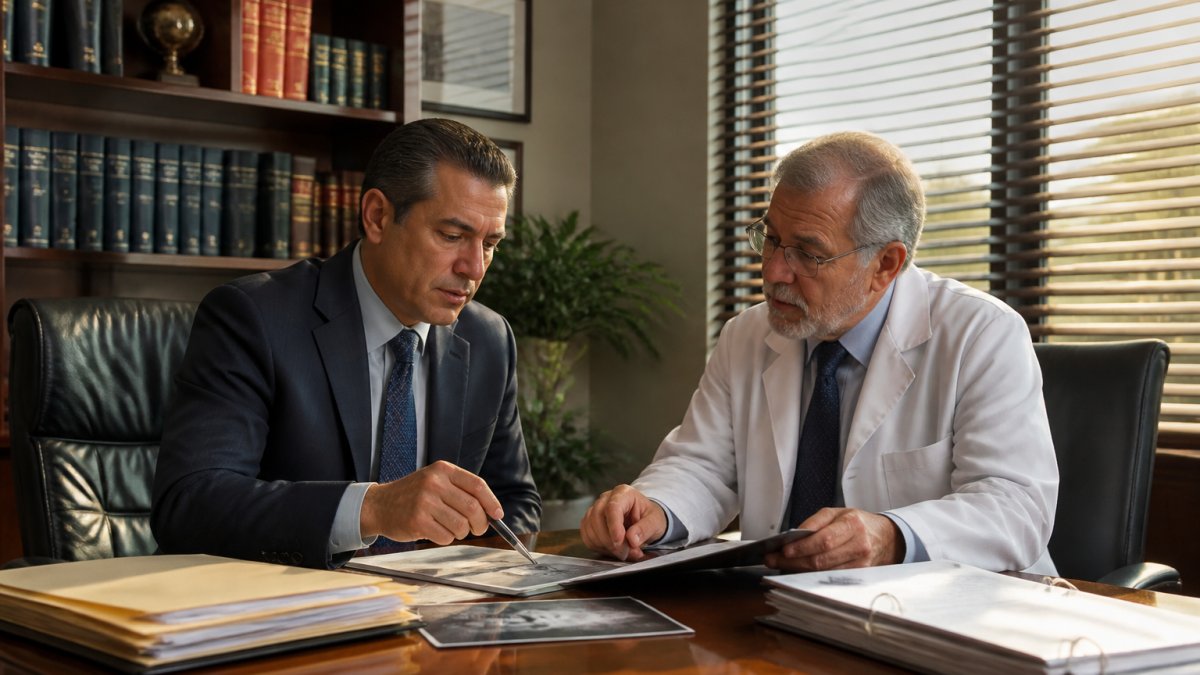
Here is how their role breaks down:
- Evaluate the evidence. The expert reviews police reports, medical records, and scene data before anyone files anything.
- Form an opinion. That opinion must rest on facts and accepted methods, not instinct.
- Write a report or declaration. In California, this is often the first formal disclosure of the opinion.
- Sit for a deposition. Opposing counsel will question the expert under oath.
- Testify at trial. The expert explains findings to the jury in plain language.
- Withstand challenge. A judge decides whether the jury ever hears the opinion at all.
That last step is where cases quietly turn.
Proving Wrongful Death in California: The Elements and the Evidence
A wrongful death claim in California requires proof that the defendant’s conduct caused the death and that surviving heirs suffered losses as a result. The California Code of Civil Procedure governs who may bring the claim and what it covers.
Proving wrongful death in California means proving each element separately:
- Duty. The defendant owed the deceased a legal obligation, such as a driver’s duty to operate safely.
- Breach. The defendant fell below the applicable standard of care.
- Causation. That breach caused the death, not some unrelated condition.
- Damages. The surviving heirs suffered measurable loss.
A common mistake is treating causation as obvious. It rarely is. When a person has a pre-existing condition, or when death occurred days after an accident, causation becomes the battleground, and it is almost always fought with experts.
The strongest wrongful death cases are built backward. We identify what must be proven, then retain the specific expert who can prove it, rather than hiring an expert and hoping the theory follows.
Types of Expert Witnesses in Wrongful Death Cases
The types of expert witnesses in wrongful death cases fall into four broad categories: medical, accident reconstruction, economic, and vocational. Most cases use two or three.
Medical experts interpret injuries, cause of death, and survivability. A forensic pathologist can distinguish a fatal trauma from a natural event. A treating physician can explain the deceased’s condition before the incident.
Accident reconstruction experts analyze how an incident occurred. They work from skid marks, vehicle damage, sight lines, and physical evidence to rebuild the sequence of events.
Economic experts calculate financial losses: lost income, lost earning capacity, and the value of household services the deceased provided.
Vocational experts assess the deceased’s work capacity and career trajectory, which matters when the person was young or mid-career.
Pick the wrong discipline and the opinion never addresses the element you need.
Expert Witness Testimony in Wrongful Death Cases: Causation, Standard of Care, and Accident Reconstruction
Expert witness testimony in wrongful death cases does its heaviest lifting on causation and the standard of care. A medical expert connects the injury to the death. An accident reconstruction expert connects the defendant’s conduct to the injury. Together they close the chain.
The standard of care is where judges and juries need the most help. It is not a gut feeling about what a reasonable person would do; it is a professional benchmark, and experts articulate it. For a commercial trucking case, that benchmark may come from federal motor carrier rules. For a premises case, it comes from property maintenance standards.
Accident reconstruction deserves particular attention because it is technical and visual. A reconstruction expert can show the jury, through measurements and demonstrated physics, that a driver had time to brake and did not. That is far more persuasive than an attorney asserting it.
Retaining an expert before the evidence is preserved is a costly error. Physical evidence degrades, surveillance footage is overwritten, and vehicles are repaired or destroyed. Once that happens, no expert can reconstruct what is gone.
The Wrongful Death Damages Expert: Putting a Number on Loss
A wrongful death damages expert converts a human loss into a defensible figure. Economic experts calculate lost income and earning capacity; vocational experts establish what the deceased could reasonably have earned over a working life.
Under California Code of Civil Procedure section 377.60, a wrongful death claim belongs to specified heirs, typically a surviving spouse, domestic partner, children, and in some circumstances the deceased’s parents or other heirs who were dependent on the decedent.
What the heirs can recover. California recognizes two broad buckets: (Source: Federal Rules of Evidence)
- Economic damages, financial support the deceased would have provided, loss of household services, funeral and burial expenses, and the reasonable value of services the decedent would have contributed to the family.
- Non-economic damages, loss of love, companionship, comfort, care, assistance, protection, affection, society, and moral support, plus the loss of training and guidance a parent would have given a child.
How this differs from a survival action. A survival action under California Code of Civil Procedure section 377.34 belongs to the estate and compensates for the injury the deceased suffered before death, medical bills, the decedent’s own pain and suffering, and lost earnings during the survival period.
How the expert builds the number. A credible economic expert typically works through these steps:
- Establish the decedent’s base earnings from tax returns, W-2s, pay stubs, and business records.
- Project work-life expectancy using published actuarial tables and the decedent’s occupation, health, and career trajectory.
- Add fringe benefits, employer retirement contributions, and the value of household services the decedent performed.
- Subtract personal consumption, the share of income the decedent would have spent on themselves rather than the family.
- Discount the future stream to present value using an appropriate rate, and account for inflation and wage growth.
A vocational expert often feeds step two by assessing the decedent’s earning capacity, especially for younger decedents, self-employed workers, or people between jobs or in career transitions. A forensic accountant may handle complex business income or ownership interests.
| Expert Type | What They Quantify | Typical Case Use |
|---|---|---|
| Economic | Lost income, earning capacity, household services, present value | Nearly all cases with dependents |
| Vocational | Work capacity and career trajectory | Younger, mid-career, or self-employed decedents |
| Forensic accountant | Business income, ownership interests, complex earnings | Business owners and high earners |
| Medical | Cause of death, injury severity, survival period | Contested causation or survival claims |
| Reconstruction | Sequence of the incident | Vehicle and premises accidents |
The assumptions inside a damages model, retirement age, growth rate, personal-consumption percentage, discount rate, move the final figure more than the expert’s credentials do. We pressure-test every assumption before the report is finalized, because opposing counsel will attack the model long before they attack the résumé.
What most guides miss is that damages experts are vulnerable on assumptions. Change the retirement age or the growth rate and the number moves substantially. We prepare for that cross-examination from day one.
California Admissibility Rules and How Experts Are Challenged
California does not follow the federal Daubert standard.
Qualification. Under the standard set out in Sargon Enterprises, Inc. v. University of Southern California (2012) 55 Cal.4th 747, the trial court acts as a gatekeeper. The court asks whether the expert has sufficient skill, knowledge, or experience in the field to make the opinion helpful, and whether the matter relied on provides a reasonable basis for the opinion.
Novel scientific techniques. When an expert relies on a new scientific method rather than settled science, California applies the Kelly-Frye rule (from People v. Kelly (1976) 17 Cal.3d 24). The proponent must show the technique is generally accepted as reliable in the relevant scientific community. Established methods, standard accident reconstruction, accepted actuarial tables, routine forensic pathology, do not trigger this analysis.
How challenges actually play out. Opposing counsel usually attacks one of four things:
- Qualifications. Does the expert actually have expertise in this specific area? A general surgeon may not qualify to opine on a specialized neurological condition.
- Methodology. Is the method accepted in the field, or was it invented for this case? An accident reconstruction based on an unvalidated simulation can be excluded.
- Foundation. Did the expert review enough evidence, scene photos, medical records, depositions, to form a reliable opinion? An opinion built on a single report is vulnerable.
- Bias. Is the expert a repeat witness whose income depends on one side? This goes to weight, not admissibility, but juries discount it heavily.
The procedural path. Under California Code of Civil Procedure section 2034.210, each side must serve an expert witness designation listing the experts it intends to call, along with reports or declarations summarizing their opinions. After designation, the parties exchange information and take expert depositions.
A designation deadline is not a suggestion. If an expert is not timely disclosed, the court can exclude the testimony entirely, which can gut a causation or damages theory on the eve of trial. We calendar designation dates the day the case is filed.
The disclosure and deposition process matters here. A weak report gets exposed in deposition, which is why we draft expert reports with the cross-examination in mind. If the report cannot survive a hostile reading, it will not survive trial.
Choosing and Evaluating an Expert Witness
Choosing an expert witness is a filtering exercise, not a search for the most decorated resume. The best expert is the one whose opinion maps directly onto an element you must prove.
Evaluate candidates against these criteria:
- Direct experience with the specific accident type or medical condition at issue
- Prior testimony in similar California cases, with transcripts available
- Communication style that a jury will find credible rather than condescending
- Availability for deposition and trial dates, not just the initial report
- Independence from any financial interest in the outcome
- Willingness to concede weak points honestly, which builds credibility
Likability matters as much as credentials. A jury that dislikes an expert discounts the opinion, no matter how sound it is.
On cost, we handle personal injury matters on a contingency-fee basis with no upfront cost to the client, and expert fees are part of case preparation rather than a separate bill. Our team includes bilingual staff and senior attorneys who manage cases directly, and we’re available around the clock for clients navigating a loss.
Losing a family member to someone else’s negligence is a weight no one should carry alone, and the legal process that follows can feel just as heavy. Abkarian Law Group has spent more than 34 years building wrongful death and personal injury cases, with a 99% success rate on accepted cases and zero-fee representation for injury clients. Our senior attorneys handle personalized case management, our bilingual team serves clients in English, Armenian, Spanish, and Farsi, and we’re available 24/7.
Frequently Asked Questions
What does an expert witness do in a wrongful death case?
An expert witness uses specialized knowledge to help the court understand technical issues. They analyze evidence, form opinions, and testify about matters like accident reconstruction, medical cause of death, or economic loss. In California wrongful death litigation, their objective analysis supports claims for negligence, causation, and damages. They do not decide the case; they clarify complex evidence for the judge and jury.
How do experts help calculate wrongful death damages?
A wrongful death damages expert quantifies financial losses, including lost income, earning capacity, and future earnings. They may also assess non-economic losses like loss of companionship. These experts use accepted economic methods to present clear figures, helping surviving heirs recover fair compensation. Their testimony turns abstract losses into concrete numbers the court can consider.
Can an expert witness testify about the cause of death?
Yes. Medical experts, such as forensic pathologists, frequently testify about the cause of death. They review autopsy reports, medical records, and other evidence to explain how injuries led to death. Their testimony helps establish causation, a critical element in a California wrongful death claim. Courts rely on their specialized knowledge to resolve factual issues.
How are expert witnesses challenged in litigation?
Opposing parties may challenge an expert’s qualifications, methodology, or bias. Under California law, courts assess whether testimony meets admissibility standards. Challenges can occur through motions or during cross-examination. A credible expert with solid credentials and objective analysis can withstand these attacks, but the process requires careful preparation by your attorney.