
How to Handle Insurance Adjusters in Injury Cases
Table of Contents
- What Insurance Adjusters Do and How They Investigate
- What Not to Say to Insurance Adjusters
- The Recorded Statement: Why You Should Decline
- How to Document Personal Injury Damages
- Communicating with Adjusters: Email vs. Phone Strategy
- Recognizing Low-Ball Settlement Offers and Negotiation Tactics
- When to Hire an Attorney to Handle Your Claim
- Conclusion
Last Updated: August 27, 2026
What Insurance Adjusters Do and How They Investigate
Insurance adjusters investigate personal injury claims by gathering evidence, interviewing witnesses, reviewing medical records, and assessing liability to determine the value of your case. Their primary goal is protecting the insurance company’s bottom line, not fairness. Understanding how they work gives you a critical advantage.
Adjusters follow a structured investigation process: requesting medical records, police reports, and witness statements; photographing accident scenes; and interviewing you. Everything you say becomes part of the official claim file and can be used against you later. Their incentive structure is clear, lower payouts mean better performance metrics.
Common tactics include requesting recorded statements and looking for inconsistencies in your account. Adjusters are trained to spot contradictions between what you say now and what you said earlier. They’ll also investigate whether you contributed to the accident in any way. In comparative negligence jurisdictions, even partial fault on your part can reduce your recovery.
Document the adjuster’s name, title, and contact information from your first interaction. Request all communications in writing. This creates a clear record and prevents disputes about what was discussed.
What Not to Say to Insurance Adjusters
Never admit fault, apologize for the accident, or speculate about what happened. Avoid describing your injuries in detail, discussing your financial situation, or explaining how the accident has affected your life. These statements can be twisted to minimize your claim.
Don’t speculate about how the accident occurred, stick to facts you directly observed. If uncertain, say so. Adjusters will use vague statements to create doubt about your credibility. Avoid discussing your insurance coverage, policy limits, previous accidents, or settlement expectations. Never mention conversations with attorneys or other adjusters, and don’t sign anything without legal review.
Saying “I’m fine” or “I don’t think I’m seriously hurt” immediately after an accident can devastate your claim later ([peer-reviewed research](https://pmc.ncbi.nlm.nih.gov/articles/PMC5042245/)). Injuries often worsen over days or weeks. Adjusters will cite early statements to argue that current medical treatment is unnecessary or unrelated to the accident.
The Recorded Statement: Why You Should Decline
A recorded statement is a formal interview where the adjuster records your entire conversation about the accident, injuries, and medical treatment. The recording becomes part of the permanent claim file and can be used against you in settlement negotiations or court.
Most adjusters will request a recorded statement early in the claims process, framing it as routine and necessary. They may imply that refusing makes you look uncooperative. This is a pressure tactic. You have the legal right to decline, and you should exercise it.
The recorded statement serves the insurance company’s interests, not yours. The adjuster controls the questioning and can ask leading questions, create confusion, or press you on details you’re uncertain about. Your answers are permanent. If you later remember details differently, you’ve already locked yourself into a recorded account that can be used against you.
If an adjuster insists a recorded statement is mandatory, consult an attorney immediately. In most cases, it isn’t mandatory. Declining the recorded statement doesn’t stop the investigation, adjusters can still interview witnesses and review medical records, it just prevents you from being recorded making statements that can be manipulated or taken out of context.
How to Document Personal Injury Damages
Documentation is your most powerful tool when dealing with insurance adjusters. Medical records, receipts, photographs, and written accounts create an objective record that’s difficult for adjusters to dispute.
Start documenting immediately after the accident. Take photographs of the scene, vehicle damage, road conditions, and any visible injuries. Photograph bruises, cuts, and swelling over the following days as they evolve. Adjusters often minimize injuries by claiming they’re minor or unrelated to the accident. Photographic evidence is hard to argue against.
Collect all medical records and bills, including emergency room visits, doctor appointments, physical therapy, imaging studies, and prescriptions. Keep receipts for over-the-counter medications, medical equipment, and supplies. Comprehensive medical documentation supports higher damage valuations.
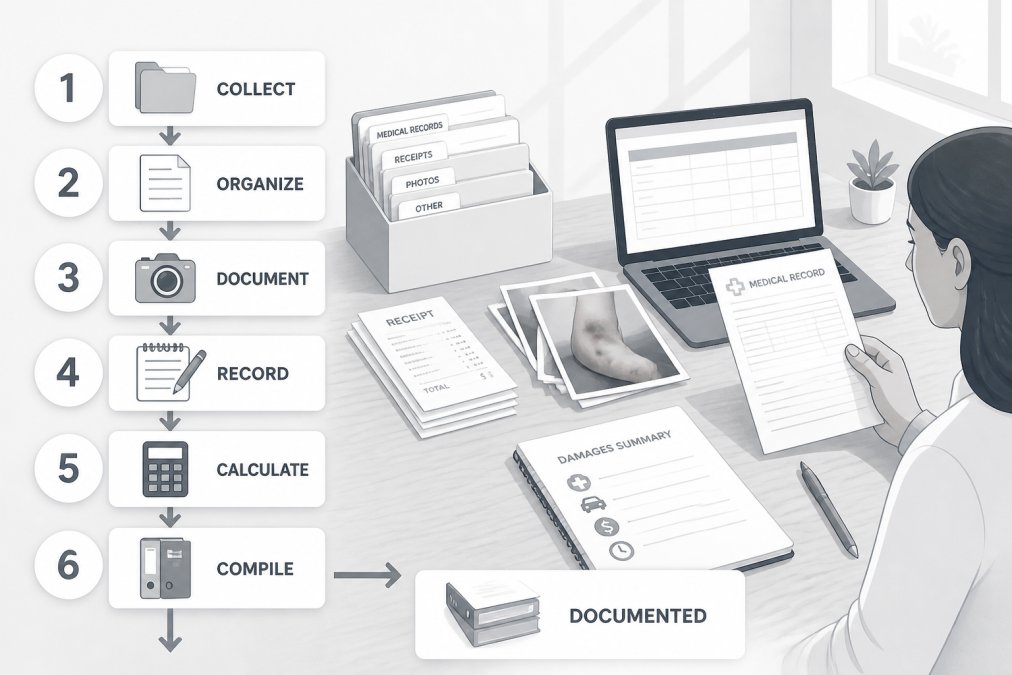
Maintain a detailed injury journal with dates, times, symptom descriptions, and pain levels. For example: "June 15: Pain in lower back rated 7/10. Unable to bend over. Took ibuprofen at 9 AM. Pain decreased to 5/10 by evening." Contemporaneous documentation is more credible than recollections months later.
Document lost wages and out-of-pocket expenses. Collect pay stubs showing income lost due to medical appointments or inability to work. Keep receipts for transportation to medical appointments, parking, meals, and other accident-related expenses. Gather witness contact information and statements. Keep communications organized by saving all emails, text messages, and letters from the insurance company. Create a timeline of events: when you reported the accident, when the adjuster contacted you, and when you provided information.
The most valuable documentation is created immediately after the accident: photos, medical records, and contemporaneous notes. Documentation created months later is less credible and easier for adjusters to dismiss.
Communicating with Adjusters: Email vs. Phone Strategy
Email communication creates a written record. Phone calls leave no documentation. When dealing with insurance adjusters, email is almost always superior.
Phone conversations allow adjusters to ask follow-up questions, create confusion, and pressure you into statements you haven’t thought through. Without a recording, there’s no objective record of the conversation. Email forces precision. You can draft responses carefully, review them before sending, and maintain a clear written record. Adjusters must respond in writing, which creates documentation of their positions.

When an adjuster calls, let it go to voicemail. Call back via email: "I received your voicemail. Please send your questions via email so I can provide thorough responses." If you must speak by phone, take detailed notes immediately after and send a follow-up email confirming what was discussed.
When sending emails, be concise and factual. Answer the specific question asked and nothing more. Avoid emotional language or complaints. Use clear subject lines that include the claim number. Reference previous emails when responding to follow-ups. Before sending, re-read your email and remove anything that could be misinterpreted or used against you.
Recognizing Low-Ball Settlement Offers and Negotiation Tactics
Insurance companies use psychological tactics to pressure injured people into accepting low settlements. Understanding these tactics prevents costly mistakes.
Anchoring is the most common tactic. The adjuster makes an initial settlement offer significantly lower than the claim’s actual value. This low number becomes the psychological anchor, influencing your thinking even when you counter with a higher number. Adjusters create artificial urgency by claiming the settlement offer is only valid for a limited time. This is a pressure tactic, most settlement offers can be renegotiated.
The "take it or leave it" approach is another pressure tactic. The adjuster claims they’ve made their best offer and won’t negotiate further. This is rarely true. Insurance companies almost always negotiate if you push back professionally and provide evidence supporting higher valuation.
Adjusters minimize damages by questioning medical treatment necessity, arguing that physical therapy was excessive or that imaging studies weren’t needed. They question whether medical expenses are reasonable or related to the accident. They use comparative negligence arguments to reduce your recovery, even if you bear minimal responsibility.
A low-ball settlement offer typically undervalues damages by 30-50% compared to the claim’s actual worth (peer-reviewed research). If an adjuster’s offer seems surprisingly low or if you’re uncertain whether it’s fair, don’t accept it immediately. Consult an attorney for a second opinion.
Settlement offers often include language releasing the insurance company from all liability. Once you sign a release, you cannot pursue additional compensation even if new injuries emerge. Never sign a settlement without attorney review.
When to Hire an Attorney to Handle Your Claim
You should consider hiring an attorney when the claim is complex, the injuries are serious, the insurance company is acting in bad faith, or you’re uncertain about the settlement offer’s fairness.
Complex claims involve multiple parties, significant liability questions, or disputed facts. Serious injuries justify legal representation, the more severe your injuries and higher your medical expenses, the more important it is to have an attorney. Adjusters often undervalue serious injury claims. Bad faith insurance practices warrant legal action. If an adjuster is refusing to investigate, ignoring evidence, making unreasonable offers, or using harassment tactics, they may be violating bad faith insurance laws.
Uncertainty about settlement fairness is a valid reason to consult an attorney. Many attorneys offer free initial consultations where they can review your case and advise you.
At Abkarian Law Group, we handle personal injury claims on a contingency-fee basis, which means you pay no upfront costs. Our team investigates claims thoroughly, negotiates with insurance adjusters, and pursues litigation when necessary. With over 34 years of experience and a 99% success rate on accepted cases, we fight to secure the compensation you deserve (bbb.org).
If an insurance adjuster’s behavior feels aggressive, dismissive, or unfair, or if you’re uncertain about a settlement offer, consult an attorney. Most personal injury attorneys work on contingency and offer free consultations.
Conclusion
Handling insurance adjusters effectively requires understanding their investigation methods, knowing what not to say, declining recorded statements, documenting damages thoroughly, communicating in writing, recognizing low-ball tactics, and knowing when to seek legal help. The insurance company has trained adjusters and established procedures designed to minimize payouts. You level the playing field by understanding these tactics and protecting your rights.
If you’re facing an insurance claim and feel uncertain about how to proceed, Abkarian Law Group offers free consultations to evaluate your case. Our bilingual team provides personalized representation with no upfront costs, you pay only if we recover compensation for you. Get started with Abkarian Law Group and let our 34 years of experience work to secure the fair settlement you deserve.
| Strategy | Purpose | Outcome |
|---|---|---|
| Decline recorded statements | Prevent statements from being used against you | Protects credibility and prevents misquotation |
| Document everything | Create objective evidence of damages | Strengthens claim valuation and prevents disputes |
| Communicate via email | Maintain written record of all interactions | Prevents misrepresentation and creates accountability |
| Recognize anchoring tactics | Avoid accepting artificially low offers | Enables effective negotiation and higher settlements |
| Consult an attorney early | Get professional guidance on claim value and strategy | Prevents costly mistakes and ensures fair recovery |
Frequently Asked Questions
What should you never say to an insurance adjuster?
Avoid admitting fault, downplaying injuries, or agreeing with the adjuster's assessment of your claim. Never say you're 'fine' or 'okay' after an accident, as this contradicts injury claims. Don't speculate about how the accident happened, discuss settlement amounts you'd accept, or volunteer information beyond direct questions. Stick to factual statements and refer complex questions to your attorney. Even casual remarks can be used to minimize your damages or deny your claim.
Why should you refuse a recorded statement from an insurance adjuster?
A recorded statement locks your account into specific details that adjusters can later use against you. You may misspeak, forget details, or contradict yourself under pressure, all of which can reduce your settlement. The adjuster controls the conversation and may ask leading questions designed to undermine your claim. You have no legal obligation to provide a recorded statement, and declining protects your right to accurate representation of your injuries and damages.
How do you document personal injury damages properly?
Collect medical records, bills, and receipts from all healthcare providers. Photograph visible injuries at different stages of healing. Keep a daily journal of pain levels, limitations, and how injuries affect work and daily life. Save receipts for medications, medical equipment, and transportation to appointments. Document lost wages with pay stubs or employer statements. Gather witness contact information and police reports. This evidence supports your claim's value and counters adjuster tactics to minimize compensation.
Is it better to handle an insurance claim alone or hire an attorney?
Hiring an attorney levels the playing field against experienced adjusters trained in negotiation tactics and claim denial strategies. An attorney handles communication, protects you from recorded statements, and negotiates fair settlements based on actual damages. If your claim involves significant injuries, policy limits, comparative negligence issues, or the adjuster denies liability, legal representation increases your recovery. Many personal injury attorneys work on contingency, meaning you pay no upfront fees, only a percentage if you win.
This article was written using GrandRanker