
Motorcycle Accident Attorney: Your Guide to Legal Representation
Table of Contents
- What a Motorcycle Accident Attorney Does for Your Case
- How to Choose a Motorcycle Accident Lawyer
- Understanding the Motorcycle Accident Settlement Process
- Contingency Fee Agreements for Injury Claims Explained
- Common Motorcycle Accident Injuries and Compensation
- Liability, Fault, and Comparative Negligence in Motorcycle Crashes
- Steps to Take After a Motorcycle Accident
- Why You Need a Motorcycle Accident Attorney
Last Updated: August 28, 2026
What a Motorcycle Accident Attorney Does for Your Case
A motorcycle accident attorney specializes in representing injured riders after crashes caused by negligent drivers or unsafe road conditions. They investigate accidents, gather evidence, negotiate with insurance companies, and file lawsuits when necessary.
Motorcycle accident representation requires specialized knowledge. Your attorney must understand how motorcycles behave differently than cars, why lane splitting creates unique liability questions, and how insurance adjusters systematically undervalue motorcycle claims. They also need to understand the biomechanics of motorcycle crashes to connect your injuries to the accident.
At Abkarian Law Group, our team has spent over 25 years handling motorcycle accident cases. We know how insurance companies approach these claims differently, and how to push back. Your attorney will investigate the accident scene, interview witnesses, review police reports, obtain medical records, and build a case that proves liability and quantifies your damages. Beyond the legal work, a motorcycle accident attorney serves as your advocate when you’re vulnerable, handling insurance pressure so you can focus on recovery.
A motorcycle accident attorney investigates your crash, proves liability, negotiates with insurance companies, and fights for fair compensation, whether through settlement or trial.
How to Choose a Motorcycle Accident Lawyer
Choosing the right attorney determines whether you recover fair compensation or accept an inadequate settlement.
Start by verifying credentials through the official channels. Check the State Bar of California Attorney Search to confirm your attorney is licensed, in good standing, and has no disciplinary history. Next, look for specific motorcycle accident experience. Ask how many motorcycle cases they’ve handled, what injuries they’ve recovered for, and what settlements or verdicts they’ve achieved. Experience with your specific injury matters too, if you suffered a traumatic brain injury, you need an attorney who has handled TBI cases and understands long-term neurological costs.
Ask about their contingency fee approach. A motorcycle accident attorney working on contingency means you pay nothing upfront; they collect a percentage of your settlement or verdict. Ask what percentage they charge, whether they cover case expenses upfront, and what happens if the case doesn’t settle. Some firms only take cases they’re confident they’ll win, which means they believe in your claim.
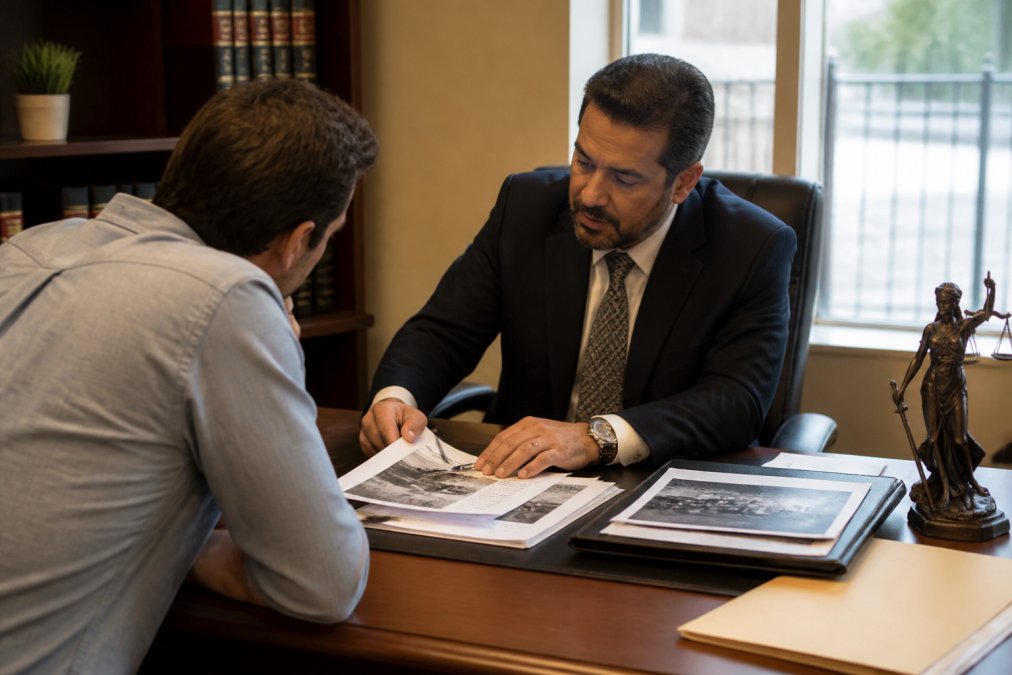
Look for bilingual representation if English isn’t your first language. Abkarian Law Group offers bilingual staff so you can communicate directly with your attorney in your preferred language, not through an interpreter who may miss important details.
Check reviews on multiple platforms. Avvo attorney ratings aggregates client reviews and peer endorsements. Super Lawyers directory lists attorneys recognized by their peers for professional achievement. Look for patterns, did clients feel heard? Were they available when needed?
Request a free consultation with at least two attorneys before deciding. Most motorcycle accident attorneys offer free initial consultations. Use this to assess whether they understand your specific injuries, answer your questions clearly, and explain their strategy for your case.
Understanding the Motorcycle Accident Settlement Process
The settlement process typically unfolds in phases, though timelines vary based on injury severity and liability complexity.
Phase 1: Investigation and Documentation (Weeks 1-8)
Your attorney begins gathering evidence immediately. They obtain the police report, photograph the accident scene, collect witness contact information, and request medical records. They also send a preservation letter to the at-fault driver’s insurance company, instructing them to preserve evidence like vehicle damage photos, surveillance footage, and maintenance records.
Phase 2: Medical Treatment and Evaluation (Weeks 2-12)
You’ll undergo medical evaluation and treatment. Your attorney coordinates with your doctors to ensure they document your injuries thoroughly. For catastrophic injuries like spinal cord damage or traumatic brain injury, they may hire medical experts to provide opinions on severity, causation, and prognosis.
Phase 3: Demand Letter (Weeks 8-16)
Once your medical treatment has progressed enough to understand the full extent of your injuries, your attorney prepares a demand letter. This document outlines the accident facts, proves the defendant’s liability, details your injuries and medical expenses, calculates lost income, and requests compensation for pain and suffering.
Phase 4: Settlement Negotiation (Weeks 16-52)
The insurance company responds with a counteroffer. Your attorney negotiates back and forth. Many cases settle during this phase. If the insurance company refuses to offer fair compensation, your attorney prepares for litigation.
Phase 5: Litigation (Months 6-24)
If settlement fails, your attorney files a lawsuit and enters the discovery phase, where both sides exchange evidence and take depositions. Eventually, the case may proceed to trial, where a judge or jury decides liability and damages.
Settlement negotiations can take months or longer for serious injuries. Insurance adjusters count on injured riders accepting quick settlements because they need money now. Your attorney’s job is to hold firm on fair value, even if it takes longer.
Contingency Fee Agreements for Injury Claims Explained
A contingency fee agreement means your motorcycle accident attorney only gets paid if you win your case. You pay nothing upfront, and the attorney covers case expenses. This arrangement aligns the attorney’s incentive with yours.
Typical contingency fees for personal injury cases range based on the attorney’s experience and case complexity. Most agreements specify a percentage of your settlement or verdict. Before signing, confirm:
- What percentage does the attorney charge if the case settles?
- What percentage if the case goes to trial?
- Does the attorney cover all case expenses upfront, or do you pay some costs?
- What happens to expenses if you lose, do you owe them?
Ask whether the attorney’s fee comes out before or after expenses are deducted. If you settle for $100,000 and the attorney charges a percentage plus case expenses, the final amount you receive will be less than the settlement amount.
Abkarian Law Group works on a contingency-fee basis for personal injury cases, meaning you pay nothing unless we recover compensation for you.
Common Motorcycle Accident Injuries and Compensation
Motorcycle crashes produce distinct injury patterns because riders lack the protective shell of a vehicle.
Road Rash (Abrasion Injuries)
Sliding across pavement strips away skin and underlying tissue. Severe road rash requires skin grafts and leaves permanent scarring. Compensation covers surgical treatment, grafting, scar revision procedures, and pain and suffering for permanent disfigurement.
Traumatic Brain Injury (TBI)
Even helmeted riders can suffer TBI from impact forces. Symptoms range from concussion to severe TBI with loss of consciousness and cognitive damage. Compensation includes medical treatment, rehabilitation, ongoing neurological care, and lost earning capacity if the injury prevents return to work.
Spinal Cord Damage
Spinal injuries from motorcycle crashes often result in partial or complete paralysis. These injuries require immediate surgical intervention, extensive rehabilitation, and lifelong care. Compensation includes emergency surgery, hospitalization, rehabilitation therapy, assistive devices, home modifications, ongoing medical care, lost income, and pain and suffering. Spinal cord damage cases typically involve substantial damage awards because lifetime care costs can be significant.
Fractures and Orthopedic Injuries
Broken bones, dislocated joints, and crush injuries are common. Compensation covers emergency surgery, orthopedic treatment, physical therapy, and lost wages during recovery.
Wrongful Death
When a motorcycle crash kills the rider, surviving family members can pursue a wrongful death claim. Compensation covers funeral expenses, lost financial support the deceased would have provided, loss of companionship, and punitive damages in cases of gross negligence.
Calculating compensation requires understanding both economic damages (medical bills, lost wages) and non-economic damages (pain and suffering, permanent disability). Your attorney will hire medical experts and vocational specialists to quantify long-term costs that adjusters try to minimize.
Liability, Fault, and Comparative Negligence in Motorcycle Crashes
Establishing liability, proving the defendant’s negligence caused your injuries, is fundamental to your case.
Common Negligent Driver Behaviors
- Left-turn collisions: Driver turns left into oncoming motorcyclist’s path
- Lane-change accidents: Driver changes lanes without checking blind spots
- Failure to yield: Driver pulls into intersection or merges without seeing motorcyclist
- Rear-end collisions: Driver fails to see stopped or slowing motorcycle
- Dooring: Parked car passenger opens door into passing motorcyclist
Your attorney proves negligence by establishing four elements: the defendant owed you a duty of care, they breached that duty through negligent conduct, their breach caused your injuries, and you suffered damages. Police reports, witness testimony, accident reconstruction experts, and vehicle damage evidence all support this proof.
Comparative Fault and Lane Splitting
Some motorcycle accidents involve partial fault by the rider. Comparative fault allows courts to assign percentage responsibility to each party. If you’re found 20% at fault and the defendant 80%, you recover 80% of your damages. Your attorney navigates comparative fault arguments by proving the defendant’s negligence was the primary cause of the crash, regardless of minor rider conduct.
Steps to Take After a Motorcycle Accident
The immediate aftermath of a motorcycle crash determines what evidence survives and what your case will look like months later.
Immediately After the Crash
Ensure your safety and others’. Call 911 if anyone is injured. Request paramedics even if you feel fine; some injuries don’t show symptoms immediately. Accept transport to the hospital and undergo full medical evaluation.
At the Scene
If you’re able, document the scene. Take photos of vehicle damage, road conditions, traffic signals, and the overall accident location. Get contact information from witnesses. Don’t admit fault or apologize for the accident. Simply exchange insurance information with the other driver and wait for police.

Police Report
The police report becomes critical evidence. Request a copy of the report number so you can obtain the full report later.
Medical Documentation
Seek medical attention immediately, even for injuries that seem minor. Document everything, emergency room visits, X-rays, CT scans, doctor’s notes, prescriptions, and follow-up appointments. Gaps in medical treatment hurt your case because insurance adjusters argue untreated injuries weren’t serious.
Report to Insurance
Notify your own motorcycle insurance company of the accident. Provide factual information but avoid detailed statements about how the accident happened. Don’t give recorded statements to the at-fault driver’s insurance company without your attorney present.
Preserve Evidence
Keep all accident-related documents: medical bills, repair estimates, prescription receipts, pay stubs showing lost income, and photos of injuries. Don’t delete anything from your phone or social media.
Consult an Attorney
Contact a motorcycle accident attorney within days of the crash. Early consultation allows your attorney to send preservation letters, interview witnesses while memories are fresh, and begin building your case.
Create a simple accident journal. Write down what you remember about the crash, your injuries, medical appointments, and how the injuries affect your daily life. This contemporaneous record is more credible than trying to recall details months later.
Why You Need a Motorcycle Accident Attorney
Representing yourself after a motorcycle accident is a costly mistake. Insurance companies have teams of adjusters, lawyers, and investigators working to minimize what they pay. You’re outmatched without legal representation.
Insurance adjusters exploit injured riders’ lack of legal knowledge. They make early settlement offers that seem reasonable but are actually 40-60% below fair value. They request recorded statements and use your words against you. They hire investigators to find reasons to deny or reduce your claim.
An experienced motorcycle accident attorney levels the playing field. Your attorney knows the tactics insurance companies use and counters them. They understand what fair compensation looks like for your specific injuries. They negotiate from a position of strength because they’re prepared to litigate if necessary. They handle all communication with insurance companies so you’re not pressured into bad decisions.
For serious injuries, traumatic brain injury, spinal cord damage, catastrophic fractures, attorney representation is essential. These cases involve complex medical evidence, substantial damages calculations, and often require expert testimony.
Abkarian Law Group has recovered millions for injured motorcycle riders over 25 years. Our 99% success rate on accepted cases reflects our commitment to thoroughly investigating claims, proving liability, and fighting for fair compensation. We work on contingency, so you pay nothing unless we recover for you.
After a motorcycle accident, you face medical decisions, insurance company pressure, and financial uncertainty, all while recovering from serious injuries. A motorcycle accident attorney removes these burdens by handling the legal work, negotiating with insurance companies, and fighting for the compensation you deserve. Abkarian Law Group provides personalized legal representation with bilingual staff, 25+ years of trial experience, and a proven track record of results. Get a free consultation today to discuss your case with an attorney who understands motorcycle accident law and treats every client like family.
Frequently Asked Questions
Q: What is the statute of limitations for filing a motorcycle accident claim in California?
A: In California, you generally have two years from the date of the motorcycle accident to file a personal injury lawsuit. This deadline is set by California's statute of limitations for personal injury claims. However, the sooner you consult with a motorcycle accident attorney, the better. Early action helps preserve evidence, secure witness testimony, and prevent crucial details from being lost. Missing this deadline can bar your claim entirely, so prompt legal action is essential.
Q: How does the motorcycle accident settlement process work?
A: The settlement process typically begins with investigation and evidence gathering, followed by filing an insurance claim or demand letter. Your attorney negotiates with the insurance adjuster, presenting medical expenses, lost income, and pain and suffering damages. Most cases settle before trial through negotiation. If the insurance company refuses fair compensation, your attorney may file a lawsuit. Settlement can occur at any stage, but having skilled legal representation ensures you don't accept lowball offers from insurance companies.
Q: How do I choose the right motorcycle accident lawyer for my case?
A: Look for an attorney with specific experience handling motorcycle accident cases, not just general personal injury work. Verify their credentials through the State Bar of California and check their track record on similar cases. Ask about their approach to your case and whether you'll work directly with an experienced attorney or a junior associate. Consider their communication style and availability. A good motorcycle accident lawyer should explain your rights clearly, answer your questions without pressure, and focus on your recovery rather than rushing you into a settlement.
Q: What damages can I recover in a motorcycle accident lawsuit?
A: You can recover economic damages including medical expenses, lost wages, and property damage to your motorcycle. Non-economic damages cover pain and suffering, emotional distress, and loss of enjoyment of life. In cases involving catastrophic injuries like traumatic brain injury or spinal cord damage, damages are typically much higher. If the negligent driver acted recklessly, you may be eligible for punitive damages designed to punish the defendant. An experienced motorcycle accident attorney will pursue all applicable damages on your behalf.
This article was written using GrandRanker