
How to Get a Police Report After a Car Accident in LA
Table of Contents
- Why Your Police Report After a Car Accident Matters
- LAPD vs. CHP: Which Agency Has Your Traffic Collision Report?
- How to Request a Police Report After a Car Accident in Los Angeles
- Cost of Police Report in Los Angeles: Fees and Payment Methods
- How Long to Get a Police Report After an Accident in LA
- California DMV SR-1 Form Requirements: What Drivers Must Know
- Privacy, Redaction, and Who Can Access Your Collision Report
- How an Attorney Can Help You Use Your Police Report
Last Updated: August 6, 2026
Why Your Police Report After a Car Accident Matters
A police report is the single most important document you’ll collect after a collision in Los Angeles. It establishes the official record of what happened, identifies all parties involved, documents bodily injury and property damage, and gives insurance adjusters and attorneys a verified foundation to work from. Without it, your claim rests on your word against another driver’s.
At Abkarian Law Group, we see this play out constantly: clients who secured their traffic collision report early have a measurable advantage over those who waited. The report captures details that memory blurs within days, road conditions, witness statements, the investigating officer’s observations, and the precise location.
A critical point: a police report and a DMV report are two separate documents with two separate purposes. Conflating them is one of the most common mistakes accident victims make, creating real delays when filing insurance claims or pursuing legal action.
This guide walks you through exactly how to get a police report after a car accident in Los Angeles, which agency to contact, what it costs, how long it takes, and what to do when something goes wrong.
LAPD vs. CHP: Which Agency Has Your Traffic Collision Report?
The agency that holds your report depends entirely on where your accident happened and who responded.
Los Angeles Police Department (LAPD) handles collisions within the City of Los Angeles city limits. California Highway Patrol (CHP) handles collisions on freeways and state highways throughout Los Angeles County, including portions of the city itself.
A crash on the 405 at rush hour is almost certainly a CHP matter. A crash at a surface-street intersection in Hollywood is LAPD. Gray zones exist near on-ramps and off-ramps, where jurisdiction can be ambiguous.
How to Tell Which Agency Responded to Your Accident Scene
Check the paperwork you received at the scene. The investigating officer should have given you a business card or preliminary exchange of information card identifying their agency. If you have a report number, the prefix often indicates the agency.
If you didn’t receive anything at the scene:
- Check the name badge or patrol car markings in any photos you took
- Call 311 (LAPD non-emergency) and provide your incident date, time, and location
- Contact the nearest CHP Area office; CHP maintains a searchable directory on their website
Confirming the responding agency before submitting your request prevents weeks of delay.
How to Request a Police Report After a Car Accident in Los Angeles
Requesting your traffic collision report is straightforward once you know which agency has it. There are three methods: online, by mail, and in person. Each has different processing times and requirements.
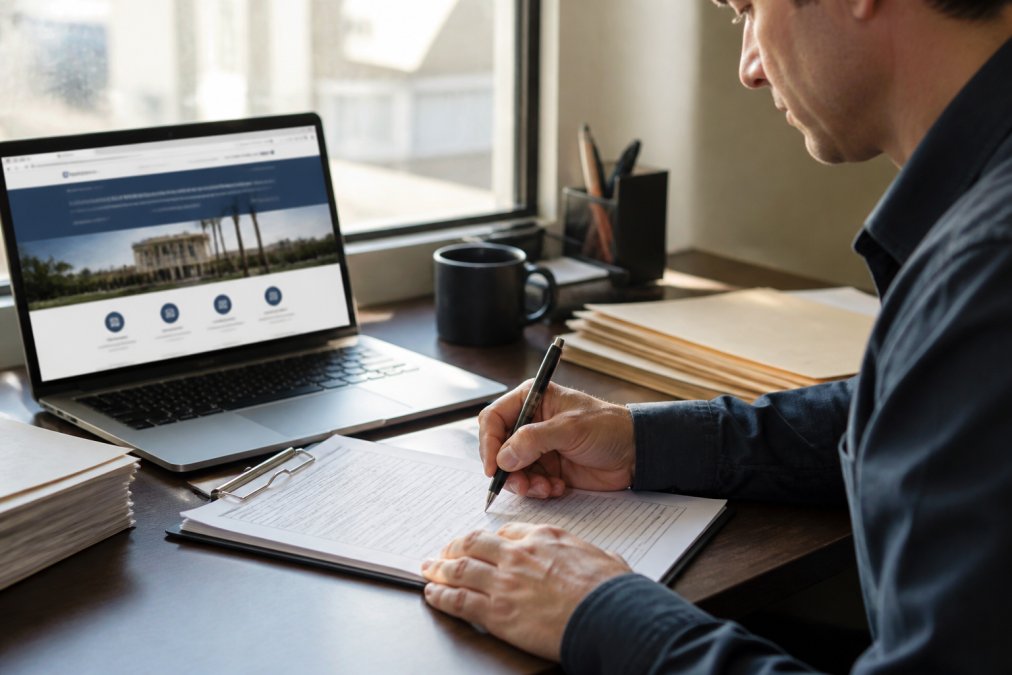
A party of interest, meaning a driver, passenger, property owner, or their legal representative, has the right to request a certified copy. Third parties face stricter access rules.
Online Request Through the LAPD or CHP Portal
For LAPD reports: The LAPD provides an online portal through LexisNexis. You’ll need the report number, incident date, and your driver information. Payment is accepted by credit card.
For CHP reports: The CHP processes online requests through their Records and Identification Bureau system. Visit the CHP’s official website, navigate to the records request section, and complete the online form. You’ll need the case number, date, and vehicle identification information.
According to the California Highway Patrol records request portal, parties of interest can request reports directly with standard processing fees applied per copy.
Online requests are the fastest path for most people.
Mail-In Request: Step-by-Step
Mail-in requests work well if you can’t access the online portal or prefer to submit a sworn statement with supporting documentation.
- Download the correct request form from the LAPD or CHP website
- Complete all fields: your full name, contact information, driver information, incident date, location, and your relationship to the accident
- Include a copy of your government-issued ID
- Prepare payment as a money order made payable to the specific department
- Mail to the Records and Identification Bureau address listed on the form
- Keep a copy of everything you send
Processing times for mail-in requests run longer than online submissions.
In-Person Request at the Records and Identification Bureau
Walking in person to the Records and Identification Bureau is the most reliable method when you need a report quickly or your online request has stalled.
LAPD Records: Located at LAPD Headquarters, 100 W. 1st Street, Los Angeles. Hours vary, so confirm before visiting.
CHP Area Offices: Each CHP area office maintains its own records counter. Identify the office that covers the freeway or highway where your accident occurred.
Bring a valid photo ID, your case number or report number if you have it, and payment. In-person requests sometimes allow same-day pickup.
| Request Method | Typical Processing Time | Payment Accepted | Best For |
|---|---|---|---|
| Online (LAPD/CHP portal) | 5-10 business days | Credit card | Most requesters |
| Mail-in | 2-4 weeks | Money order | No portal access |
| In-person | Same day to 5 days | Cash, money order | Urgent needs |
Cost of Police Report in Los Angeles: Fees and Payment Methods
The cost of a police report in Los Angeles varies by agency and the number of pages. Fees are set by individual agencies and subject to change, so verify current pricing directly with the LAPD or CHP before submitting payment.
Fees cover the cost of producing a certified copy and are paid at the time of request. Underpaying or sending the wrong payment type is one of the most common reasons requests get rejected.
Payment methods differ by request type:
- Online requests: Credit or debit card through the portal
- Mail-in requests: Money order only
- In-person requests: Cash or money order at the counter
Check the LAPD Records and Identification Division fee schedule for current pricing before submitting your request.
If you’re represented by an attorney, your legal team can often request the report on your behalf, which can speed up the process and ensure the correct form is submitted the first time.
How Long to Get a Police Report After an Accident in LA
How long it takes depends on two things: which agency you’re requesting from, and whether the report has been finalized.
Finalizing a report takes time. The investigating officer must complete their write-up, which can take anywhere from a few days to several weeks depending on the complexity of the collision and current caseload. A minor fender-bender typically clears faster than one involving serious bodily injury or multiple vehicles.
Once finalized, online requests generally process within 5 to 10 business days. Mail-in requests add transit time, pushing total turnaround to two to four weeks. In-person requests can sometimes be fulfilled the same day if the report is already in the system.
What to Do If Your Request Is Delayed or Rejected
Rejected requests are common. The most frequent reasons:
- Wrong agency: You requested from LAPD but CHP responded, or vice versa
- Incorrect report number: A transposed digit will return no results
- Insufficient payment: The fee changed, or a personal check was submitted instead of a money order
- Report not yet finalized: The investigating officer hasn’t completed their write-up
- Requestor not identified as a party of interest: Insufficient ID or missing documentation
If your request is rejected, the agency should provide a reason. Address that specific issue before resubmitting. If the report isn’t finalized yet, call the Records and Identification Bureau and ask for an estimated completion date.
Do not wait indefinitely for a report before contacting your insurance company. Notify your insurer of the accident promptly regardless of whether you have the report in hand. Delayed notification can create coverage complications.
A persistent delay beyond 30 days may warrant a formal request under the California Public Records Act. An attorney can submit this on your behalf.
California DMV SR-1 Form Requirements: What Drivers Must Know
The SR-1 form is a separate document from the police report. The SR-1 is a California DMV report filed directly by the driver, not the police, and it serves a different purpose than the law enforcement traffic collision report.
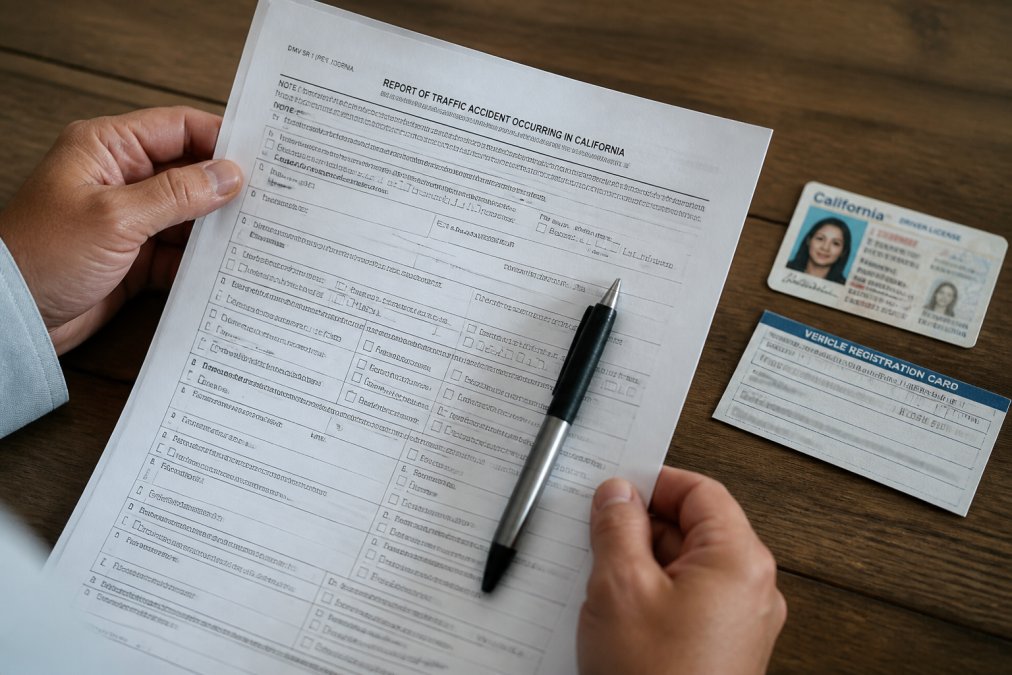
According to the California DMV SR-1 filing requirements, drivers involved in a collision must file an SR-1 with the DMV within 10 days if the accident resulted in injury, death, or property damage above a specified threshold. This filing requirement applies regardless of whether a police report was filed.
What the SR-1 Form Covers and How to Complete It
The SR-1 form collects driver information, vehicle identification details, insurance information, and a description of the accident. Completing it accurately matters: errors can create problems with your driving record and insurance status.
Key sections of the SR-1:
- Driver and vehicle information: Your name, license number, vehicle registration, and insurance policy details
- Other party information: The same details for every other driver involved
- Accident details: Date, time, location, direction of travel, and a description of what happened
- Injury and damage information: Whether there was bodily injury, fatalities, or property damage
The SR-1 is available directly from the California DMV SR-1 form download and can be submitted online or by mail.
A common mistake is assuming the police report satisfies the SR-1 requirement. It does not. These are two separate filings with two separate agencies. Missing the 10-day deadline can result in suspension of your driver’s license.
File the SR-1 within 10 days of any accident involving injury, death, or significant property damage, even if a police report was filed. The two documents serve different legal purposes and neither substitutes for the other.
Privacy, Redaction, and Who Can Access Your Collision Report
Traffic collision reports are not fully public documents in California. Access is governed by California Vehicle Code Section 20012, which restricts who can obtain a copy and what information can be disclosed.
Who qualifies as a party of interest:
- Drivers involved in the accident
- Passengers injured in the accident
- Property owners whose property was damaged
- Attorneys representing any of the above
- Insurance companies with a direct interest in the claim
- Certain government agencies
Members of the general public do not have an automatic right to access another person’s collision report. Juvenile records receive additional protections.
Redaction: Even parties of interest may receive a redacted version. Personal information, home addresses, and phone numbers may be withheld to protect privacy. If you believe your report has been improperly redacted, you can challenge the redaction through a formal request under the California Public Records Act.
Legal representation makes a real difference here. An attorney familiar with public records law can obtain a more complete version and identify whether information has been improperly withheld.
How an Attorney Can Help You Use Your Police Report
Obtaining the report is step one. Knowing how to use it is where most accident victims need guidance.
A police report is legal documentation, not a verdict. The investigating officer’s narrative reflects their observations at the scene, but it can contain errors, omissions, or conclusions that don’t fully capture what happened. Insurance companies will scrutinize the report for language that supports a lower settlement offer.
An experienced personal injury attorney will:
- Review the report for factual errors and pursue corrections through the investigating officer
- Cross-reference the report against witness statements, photos, and medical records
- Use the report’s documentation of bodily injury and property damage to build a damages case
- Counter insurance company arguments that minimize the severity of the collision
Abkarian Law Group has handled personal injury cases in Los Angeles for over 34 years, with a 99% success rate on accepted cases. The firm operates on a contingency-fee basis, meaning there are no upfront costs for personal injury clients. Bilingual staff, fluent in English, Armenian, Spanish, and Farsi, are available to walk you through every step of the documentation process, including obtaining and interpreting your collision report.
The difference between a settled claim and a maximized recovery often comes down to how thoroughly the legal documentation is assembled and used. A police report is the foundation. What gets built on top of it determines the outcome.
Getting your police report after a car accident in Los Angeles requires knowing which agency to contact, which form to submit, and what to do when the process stalls. Abkarian Law Group offers free consultations for accident victims throughout Southern California. With bilingual representation, zero upfront fees, and senior attorneys handling your case directly, the firm is equipped to take your documentation from a stack of forms to a fully supported legal claim. Get a free consultation with Abkarian Law Group today.
Frequently Asked Questions
How long does it take to get a police report after an accident in LA?
Processing times vary by agency. LAPD reports are typically available within 7 to 14 business days after the incident date. CHP reports can take up to 10 business days once the investigating officer finalizes the report. If you request by mail, add several additional days for transit. Delays are common when the case involves fatalities, juveniles, or an ongoing investigation. Check your report number or case number status online before following up with the agency directly.
Can I get a police report online in Los Angeles?
Yes. Both the LAPD and the California Highway Patrol offer online portals where parties of interest can request a certified copy of a traffic collision report. You will need the incident date, location of occurrence, and your driver information to complete the request. Online requests are the fastest method for most people and allow you to pay the processing fee by credit card rather than submitting a money order through the mail.
What information do I need to request a traffic collision report in California?
To request a traffic collision report from LAPD or CHP, you typically need the report number or case number, the incident date, the location of the accident, and proof that you are a party of interest, such as a driver involved, a vehicle owner, or an insurance representative. Without the report number, you can still submit a request using the date and location, though processing may take longer. Your attorney can also request the report on your behalf.
Do I need a police report to file an insurance claim in California?
A police report is not legally required to file an insurance claim in California, but insurers treat it as critical legal documentation. It establishes the facts of the traffic accident, identifies the investigating officer's findings, and records driver information and vehicle identification for all parties. Without it, your insurer may dispute liability or delay your claim. If bodily injury or significant property damage occurred, obtaining a certified copy of the collision report strengthens your position considerably.
This article was written using GrandRanker