
Signs of Internal Car Damage After a Fender Bender
Table of Contents
- Understanding Internal Car Damage After a Fender Bender
- How to Inspect a Car After a Fender Bender: A Step-by-Step Checklist
- Signs of Frame Damage After a Collision
- Mechanical and Suspension Problems You Might Miss
- Car Leaking Fluid After a Collision: What It Means
- Delayed Symptoms After a Car Accident: When Hidden Damage Appears Later
- How Hidden Damage Is Diagnosed and Documented
- Insurance, Documentation, and Your Next Steps
- Frequently Asked Questions
Last Updated: October 16, 2026
Understanding Internal Car Damage After a Fender Bender
A fender bender might seem minor, scratched paint, a dented bumper, but what you can’t see often matters more. (Source: National Highway Traffic Safety Administration (NHTSA) guidelines)
Signs of internal car damage after a fender bender include problems that develop days or weeks later.
Catching hidden damage early can save thousands and keep you safe.
This guide covers how to spot signs of internal car damage after a fender bender, what to do if you find problems, and how to protect yourself legally and financially.
How to Inspect a Car After a Fender Bender: A Step-by-Step Checklist
A fender bender doesn’t always announce itself with a dramatic crunch, sometimes the only clue is a misaligned hood or a vibration that shows up three days later. This checklist follows the order you should use: at the scene, during a short controlled drive, and at a professional shop.
If anyone in the vehicle has neck pain, headache, dizziness, numbness, abdominal pain, or confusion, stop the vehicle inspection and seek emergency medical care first. Vehicle damage and human internal injuries are different problems with different urgency. A car can be replaced; a delayed internal injury cannot.
::: Once medical safety is assured, the focus shifts to the mechanical and structural integrity of the automobile, which often necessitates professional guidance when repairing vehicle body damage.
Step 1: At the Scene, Safe Visual and Physical Checks
Park on level ground, turn the engine off, and use a flashlight even in daylight. Walk a slow perimeter and check:
- Bumper and impact absorber: Look for cracks, dents, or separation from the frame, and push gently to feel if it is loose. The bumper cover often hides a foam or plastic energy absorber and a steel or aluminum reinforcement bar; a cracked absorber can look fine from outside.
- Hood and trunk alignment: Open and close them slowly; they should align evenly with the body panels. Uneven or too-wide gaps suggest frame or hinge damage.
- Body panel gaps: Run your hand along the seams. Consistent gaps mean the frame is straight; wide or uneven gaps point to structural shift.
Document everything with wide shots, close-ups, and the other vehicle’s plate if safe. This record helps with insurance claims and legal disputes.
Step 2: A Short Controlled Drive, What to Feel and Listen For
If no one is injured and no fluid is actively leaking, a brief low-speed drive on a quiet street with windows down can reveal problems a parked inspection misses.
- Steering feel: Note whether the wheel pulls, feels loose, or vibrates. Pulling suggests alignment or suspension damage; vibration suggests a bent wheel, damaged tire, or worn suspension component.
- Braking: Test the brakes gently at low speed. A soft pedal, a pull to one side, or grinding means stop driving and call for a tow.
- Noises: Listen for clunking over bumps, scraping from the undercarriage, or a new rattle from the dashboard or door panels.
Keep the drive under a few minutes and stay close to home or the shop. The goal is to gather clues, not to prove the car is fine.
Step 3: At the Shop, What a Professional Inspection Adds
A technician sees what you cannot: the undercarriage, frame rails, suspension mounting points, and electronic fault history. A thorough inspection includes a lift inspection, diagnostic scan, frame measurement, and alignment check. Ask for findings in writing with photos and measurements, that report is what an insurer relies on.
What Means Stop Driving Immediately
Some symptoms are not “schedule an appointment” problems. Stop driving and arrange a tow if you notice any of the following:
- An active fluid leak, especially brake fluid, coolant, or transmission fluid
- A steering wheel that pulls hard or feels disconnected
- Brake pedal that sinks, grinds, or stops the car poorly
Driving on a bent suspension or leaking brake line can turn a repairable fender bender into a much larger bill or a second collision.
Signs of Frame Damage After a Collision
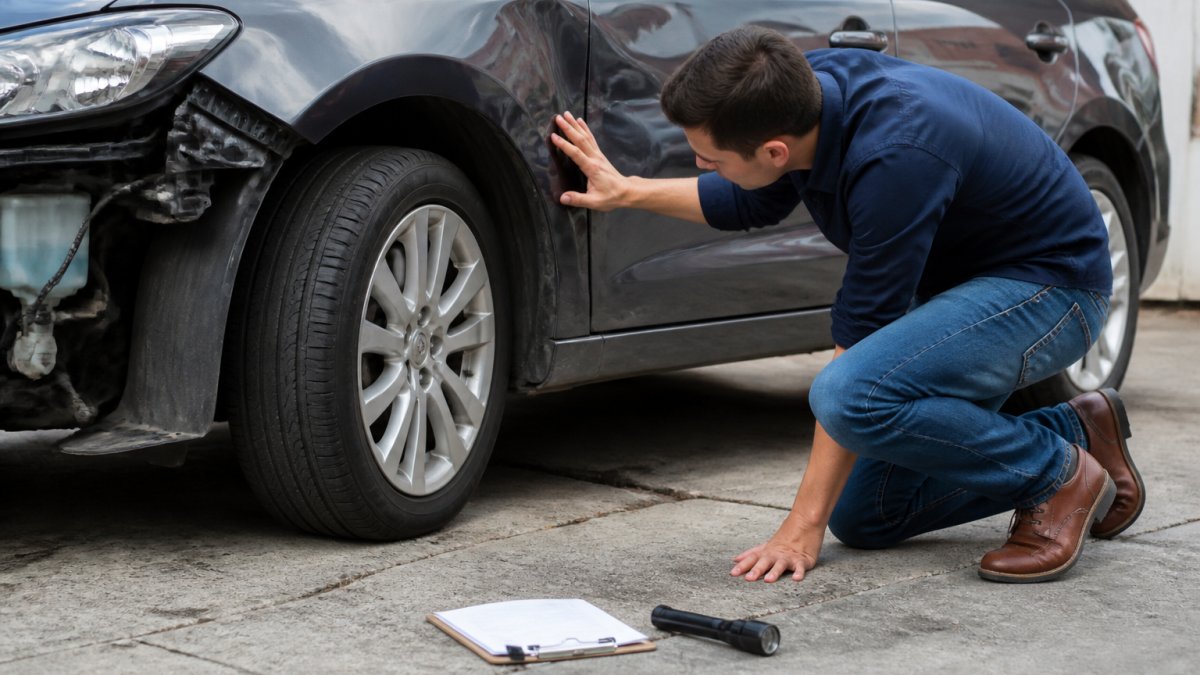
Frame damage is often hidden beneath the bumper and body panels, a collision that seems minor can bend or shift the frame without obvious external signs.
Frame misalignment happens when collision force pushes the frame out of position. Even small shifts affect how the car drives and how other systems function.
Look for these frame damage signs:
- Uneven body panel gaps: Doors, hood, and trunk should sit flush with consistent spacing. Gaps varying by more than 1/8 inch suggest frame shift.
- Difficulty opening or closing doors: Doors that stick, rub, or don’t close smoothly point to frame misalignment.
- Visible creases or buckles in the frame: Obvious frame damage that requires professional repair.
Frame damage affects safety, handling, resale value, and the alignment of suspension and wheels.
Mechanical and Suspension Problems You Might Miss
Suspension connects your wheels to the frame and keeps the car stable.
Suspension damage includes bent control arms, damaged struts, broken springs, or misaligned steering components.
Watch for these suspension warning signs:
- Vehicle pulling to one side: The car drifts left or right even on straight roads. This suggests bent suspension components or wheel alignment problems.
- Steering wheel vibration: Shaking in the steering wheel at highway speeds points to bent wheels, damaged suspension, or frame misalignment.
- Uneven or premature tire wear: One tire wears faster than others. This happens when the wheels are not aligned properly after a collision.
Suspension problems affect handling, safety, and tire life. A misaligned vehicle burns through tires in weeks instead of years.
Wheel alignment is checked with a computerized machine that measures each wheel’s angle against factory specifications.
Car Leaking Fluid After a Collision: What It Means
Fluid leaks after a collision indicate internal damage. The type of fluid tells you what system is damaged.
Here’s what each fluid color means:
- Red or pink fluid: Transmission fluid. Leaks suggest transmission damage or broken transmission cooler lines.
- Green or bright orange fluid: Engine coolant. Leaks point to damaged radiator, hoses, or water pump.
- Brown or black fluid: Engine oil. Leaks suggest cracked oil pan, damaged gaskets, or broken oil lines.
Even small leaks worsen over time: a slow transmission fluid leak can destroy the transmission within days, coolant leaks cause overheating, and oil leaks starve the engine of lubrication.
Have a mechanic diagnose the leak source immediately, some leaks are minor and inexpensive, others indicate major internal damage.
Delayed Symptoms After a Car Accident: When Hidden Damage Appears Later
Hidden damage often does not show up right away. You might feel fine and your car might drive normally for days or weeks. Then problems emerge. Understanding why this happens helps you decide what to do next, and it starts with a distinction many articles blur.
Vehicle Damage vs. Human Internal Injuries
This topic mixes two very different problems. One is damage to the car: bent suspension, a shifted frame, a cracked transmission cooler line. The other is damage to a person: internal bleeding, a concussion, whiplash, or a soft-tissue injury that doesn’t hurt until the next morning. They don’t have the same urgency.
If you or a passenger has headache, dizziness, confusion, neck or back pain, numbness, abdominal pain, bruising you cannot explain, or shortness of breath after a collision, seek emergency medical care immediately. Do not wait to see whether it improves, and do not let a vehicle inspection delay medical evaluation.
Vehicle symptoms can usually wait for a shop appointment; human symptoms should be evaluated by a medical professional right away. Keep the two tracks separate in your notes so an insurer or attorney can see clearly what was vehicle damage and what was personal injury.
Why Vehicle Damage Appears Late
Delayed vehicle symptoms have concrete causes:
- Damage is internal: A bent control arm, a shifted subframe, or a damaged engine mount may not affect how the car drives until the misalignment worsens.
- Seals and gaskets fail gradually: A cracked gasket or a stressed transmission cooler line might not leak for days. Once it starts leaking, the damage accelerates.
- Stress fractures develop over time: Metal bent by collision impact can crack after repeated stress from normal driving, especially at welds and mounting points.
Common Delayed Vehicle Symptoms
- Steering wheel vibration that worsens with speed
- New noises from under the car, especially over bumps or during turns
- Fluid leaks that appear after a few days
What to Do When a New Symptom Appears
Document the symptom the day you notice it, when it started, what it sounds or feels like, and when it happens (acceleration, turning, braking, highway speed). Then arrange a professional inspection.
Don’t assume a new problem is unrelated to the accident. A written inspection report linking the symptom to the collision is far more persuasive to an insurer than a verbal complaint months later.
How Hidden Damage Is Diagnosed and Documented
A complete professional diagnosis takes time and expertise.
Here’s what a thorough inspection includes:
- Visual inspection: Technician checks for visible damage, frame creases, panel gaps, and obvious problems.
- Lift inspection: Car is raised on a lift so technician can examine the undercarriage, suspension, frame, and fluid lines.
- Diagnostic scan: A computer scanner reads engine codes and sensor data. This reveals electrical damage and sensor misalignment.
Documentation is essential. The inspection report should include:
- Photos of all damage (exterior, undercarriage, engine bay)
- Measurements showing frame or suspension misalignment
- List of all problems found
This documentation proves what damage exists, when it was discovered, and what repairs are needed, insurers use it to determine liability and coverage.
Insurance, Documentation, and Your Next Steps
After a collision, proper documentation determines how much compensation you receive and whether your repairs are covered.
Here’s what to do:
Immediately after the collision:
- Take photos and video of all damage (your car and the other vehicle)
- Get the other driver’s insurance information
- Call police and get a report number
Within 24-48 hours:
- Report the collision to your insurance company
- Get a professional damage inspection (not just the insurance adjuster)
- Document any new symptoms or problems
For your legal protection:
Contact a personal injury attorney if you have injuries or significant damage. At Abkarian Law Group, we help accident victims understand their rights and maximize their compensation.
Insurance companies sometimes underestimate damage or deny claims; an attorney levels the playing field.
Key documents to preserve:
- Police report and report number
- Photos and video from the scene
- Insurance company correspondence
These documents prove the extent of damage and justify your claim for compensation.
Frequently Asked Questions
How do you know if you have internal damage from a car accident?
Internal car damage often isn’t visible from the outside. Look for signs like misaligned body panels, steering wheel vibration, the vehicle pulling to one side, or unusual noises when driving. A diagnostic scan by a mechanic can detect electrical and sensor damage that you cannot see. If your car was hit hard enough to cause bumper or frame damage, hidden mechanical problems are common even if the exterior looks minor.
What are delayed symptoms after a car accident?
Some damage doesn’t show immediately. Suspension problems, frame misalignment, and electrical faults may take days or weeks to become obvious. You might notice increasing steering wheel vibration, worsening fuel economy, or warning lights appearing on your dashboard. If you experience any unusual behavior after a collision, have a professional inspection done. Document everything you observe and report it to your insurance company and attorney right away.
Is it safe to drive a car after a fender bender?
Not always. If you see fluid leaking, the steering feels loose or shaky, the car pulls strongly to one side, or warning lights appear on the dashboard, stop driving immediately. These indicate suspension damage, steering problems, or brake system issues that make the vehicle unsafe. Even if the car seems fine, a professional inspection is essential before driving it regularly. Never assume a minor fender bender means no internal damage.
When should you have a mechanic inspect your car after an accident?
Have a professional inspection done as soon as possible after any collision, even a minor one. The longer you wait, the harder it becomes to prove the damage was caused by the accident. A mechanic can run a diagnostic scan to check for electrical and sensor problems, inspect the suspension and alignment, and identify frame damage that isn’t visible. This inspection protects your insurance claim and ensures the vehicle is safe to drive.
If you’ve been in a collision and discovered hidden damage, don’t handle it alone. The team at Abkarian Law Group has over 34 years of experience helping accident victims recover full compensation. We offer free consultations and work on contingency, so you have no upfront costs. Call us today to discuss your case and learn how we can help you get the settlement you deserve.