
What to Do After a Car Accident in California
Table of Contents
- Prioritize Safety and Move to a Safe Location
- Call 911 and Emergency Responders
- Exchange Information and Obtain Witness Statements
- Documenting Car Accident Evidence at the Scene
- California Car Accident Reporting Requirements
- Notify Your Insurance Company and Manage the Claims Process
- When to Hire a Personal Injury Attorney
- Conclusion
Last Updated: August 21, 2026
Prioritize Safety and Move to a Safe Location
The first moments after a car accident determine whether you and your passengers avoid further injury. Your immediate priority is getting everyone to safety, not assessing damage or exchanging information.
If your vehicle is operable and traffic allows, move it out of active lanes to a safe shoulder or parking area. Turn on your hazard lights to alert other drivers. If your car won’t start or moving it would cause greater danger, stay inside with seatbelts fastened and wait for emergency responders. Never stand in traffic or between vehicles.
Check yourself and all passengers for injuries. Look for obvious signs like bleeding, broken bones, or difficulty breathing. Some injuries aren’t immediately apparent, so even if you feel fine now, you may need medical evaluation later. Keep everyone calm and reassure passengers that help is on the way.
If other vehicles are involved and drivers are aggressive or acting erratically, do not engage. Stay in your locked vehicle and wait for police. Your safety matters more than any argument about fault. Document the other driver’s appearance and vehicle details from a safe distance if possible.
Never leave the scene of an accident, even if damage appears minor. Leaving can result in serious legal consequences, including criminal charges. California Vehicle Code Section 20001 requires drivers to remain at the scene and provide information.
Call 911 and Emergency Responders
Contact emergency services immediately if anyone is injured, if there’s significant property damage, or if you suspect criminal activity. Even seemingly minor accidents warrant a police report in many situations, it creates an official record that protects you legally and supports your insurance claim.
When you call 911, stay calm and provide dispatch with your exact location, the number of vehicles involved, and a brief description of injuries if any. Tell them if hazardous materials are leaking or if traffic is creating a safety hazard. Dispatch will send police, fire, and medical personnel as needed.
Stay on the line with the dispatcher until help arrives. They may give you instructions for first aid or how to manage the scene. If anyone is seriously injured, do not move them unless there’s immediate danger like fire. Let emergency medical technicians handle patient care.
Police will arrive and document the accident scene. They’ll take statements from you, the other driver, and witnesses. Be factual and brief in your statement, don’t speculate about what happened or admit fault. Stick to what you directly observed. The police report becomes a critical piece of evidence for your insurance claim and any potential legal action.
Ask the responding officer for the report number and when you can access the full police report. In many jurisdictions, you can request it online within days. Keep this report number handy, you’ll need it when you contact your insurance company.
If police don’t arrive within a reasonable time and no one is seriously injured, you can file a police report yourself at your local police department or online through their website. This creates an official record even if officers didn’t respond to the scene.
Exchange Information and Obtain Witness Statements
Once everyone is safe and emergency responders are handling medical needs, exchange critical information with the other driver. Get their full name, phone number, email address, driver’s license number, and home address. Write down their vehicle make, model, color, year, and license plate number. Ask for their insurance company name and policy number.
Do not discuss fault, apologize, or make statements that could be interpreted as admitting responsibility. Stick to factual details: "I was heading north on Main Street when the other vehicle entered the intersection." Avoid phrases like "I didn’t see you" or "I should have been paying more attention." Insurance companies and attorneys will analyze these statements, and they can be used against you later.
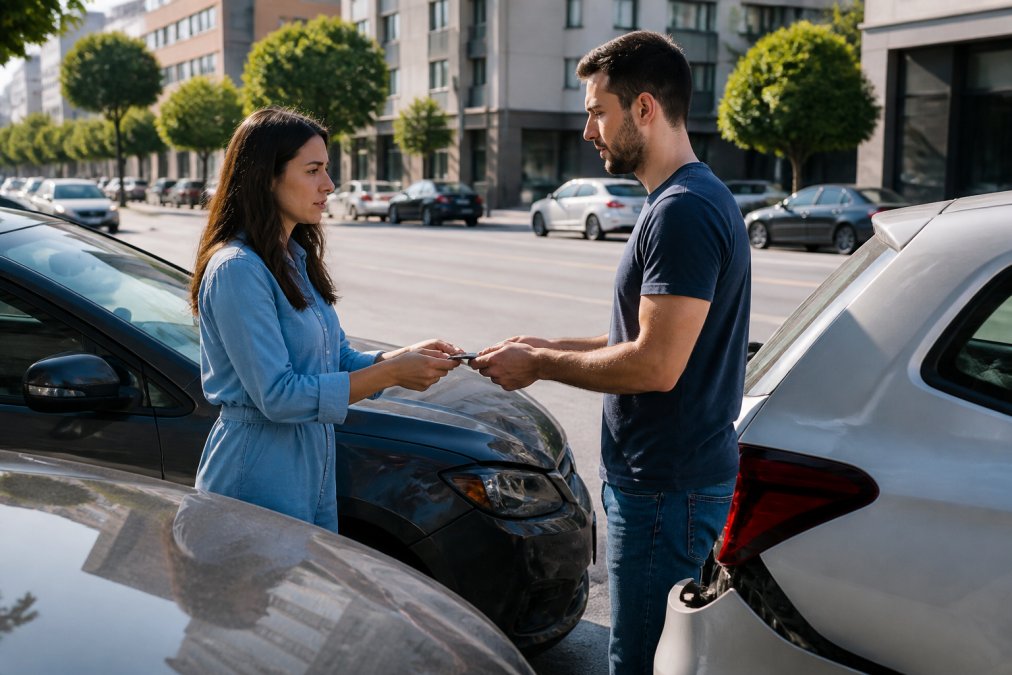
If there are witnesses who saw the accident, ask them to stay and provide a statement. Get their full name, phone number, and email. Ask what they saw, not what they think happened. Write down their account in their own words if possible. Witnesses often leave before police arrive, so getting their contact information immediately is critical, you won’t be able to track them down later.
If witnesses are reluctant to wait, explain that their account helps establish what actually happened. Most people will provide a brief statement if you’re respectful and direct. Never pressure or argue with a witness. If they refuse, note their vehicle information and license plate if visible, and provide this to police.
Photograph the other driver’s license, insurance card, and vehicle registration. These photos serve as backup if you lose the written information. Take photos of the scene and all vehicle damage from multiple angles before anyone moves cars.
Documenting Car Accident Evidence at the Scene
Thorough documentation at the scene protects you by creating a visual record that supports your account of what happened. Take photographs of vehicle damage, road conditions, traffic signals, street signs, and the overall scene layout.
Photograph your vehicle from multiple angles, front, back, sides, and close-ups of all damage. Include photos of the interior if airbags deployed or seats were damaged. Photograph the other vehicle in the same way. Take wide shots showing the accident location, road markings, traffic signals, and any relevant signs.
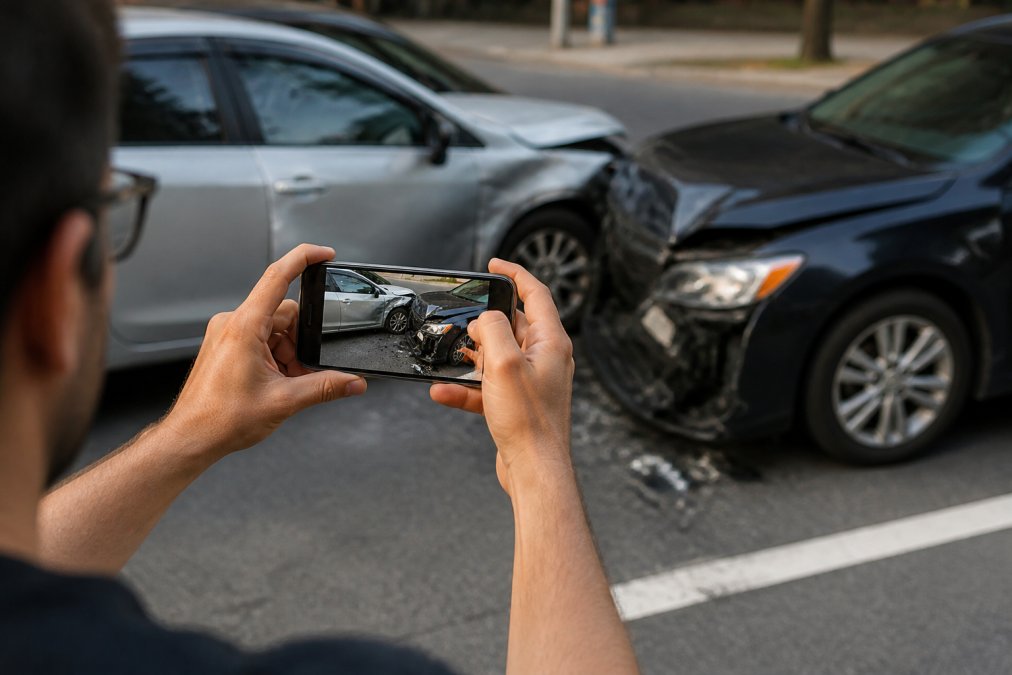
Document road and weather conditions. If it was raining, dark, or icy, photograph that. If there were potholes, debris, or obstructions, capture those too. These details matter because they establish whether conditions contributed to the accident.
Take photos of traffic signals and street signs from the perspective of each driver. This shows what each driver could see and what traffic laws applied. If the accident happened at an intersection, photograph the traffic light status if possible, along with road markings and any traffic control devices.
Write down the exact time, date, and location. Note weather conditions, road surface, and visibility. If you’re injured or shocked, ask a passenger or bystander to help document. Your written notes taken immediately after the accident carry more weight than memories recalled weeks later.
Digital evidence preservation is critical because memories fade and details blur. Photograph everything at the scene while it’s fresh, then back up those photos to cloud storage immediately. Insurance adjusters and attorneys will rely on this evidence to determine what happened.
California Car Accident Reporting Requirements
California law requires drivers involved in accidents to report the incident under specific circumstances. Understanding these requirements protects you from legal penalties and ensures proper documentation.
You must report an accident to the Department of Motor Vehicles if it resulted in injury, death, or property damage exceeding $1,000 (dmv.ca.gov). You have 10 days from the date of the accident to file this report using the SR-1 form, which you can submit online through the DMV website or by mail (dmv.ca.gov). Failure to report can result in license suspension (dmv.ca.gov).
If police responded to the scene, they file their own report with the DMV, so you may not need to file separately. However, it’s wise to confirm with the DMV that the report was received. You can check the status of your report online using your driver’s license number.
Contact your insurance company as soon as possible after the accident, even if you’re unsure about fault or injuries. Most policies require prompt notification. Provide them with the police report number, the other driver’s information, and your documentation of the scene. Do not speculate about injuries or damages, let medical professionals and insurance adjusters make those determinations.
If the other driver was uninsured or underinsured, your own insurance policy may provide coverage through uninsured motorist protection. Discuss this with your insurance agent immediately. Uninsured motorist claims follow different procedures than standard liability claims, and timing matters.
Do not post about the accident on social media. Insurance adjusters and opposing attorneys monitor social media for statements and photos that could contradict your account. Anything you post can be used against you in a claim or lawsuit. Keep details private until your case is resolved.
Notify Your Insurance Company and Manage the Claims Process
Your insurance company will assign an adjuster to investigate the accident and determine liability. Cooperate fully with the adjuster, but understand your rights. You can request a copy of the adjuster’s report and challenge their findings if you believe they’re inaccurate.
Provide the adjuster with all documentation: police report, photographs, witness statements, medical records, and repair estimates. Keep copies of everything for your records. Do not sign any settlement offer until you’ve had time to review it and understand what you’re giving up.
If you suffered injuries, get medical evaluation even if you don’t feel seriously hurt. Some injuries develop over days or weeks. Medical records establish the connection between the accident and your injuries, which is essential for any compensation claim. Follow your doctor’s treatment recommendations and keep detailed records of medical appointments, medications, and expenses.
If the other driver was at fault and their insurance is handling the claim, you can work with their adjuster. However, remember that their adjuster works for their company, not for you. They have incentive to minimize the payout. You’re not required to accept their initial offer.
For significant injuries or complex claims, consider consulting with a personal injury attorney. At Abkarian Law Group, our team has over 34 years of experience handling car accident claims. We work on a contingency basis, meaning you pay no upfront fees, we only get paid if we recover compensation for you. An attorney can negotiate with insurance companies on your behalf and ensure you’re not settling for less than your claim is worth.
When to Hire a Personal Injury Attorney
You should consider hiring an attorney if you suffered significant injuries, if liability is disputed, if the insurance company is lowballing your claim, or if the other driver was uninsured. An attorney protects your rights and handles negotiations so you can focus on recovery.
Many people try to handle claims alone and end up accepting settlements far below what their injuries warrant. Insurance adjusters are trained negotiators working to minimize payouts. An experienced attorney knows the value of your claim based on injury severity, medical expenses, lost wages, and pain and suffering.
If you’ve been to multiple law firms already, focus on finding an attorney who listens to your specific situation rather than just offering generic advice. The right firm will explain how their experience applies to your case and be transparent about realistic outcomes. At Abkarian Law Group, we treat every client like family and provide personalized case management by senior attorneys with decades of trial experience.
Your attorney will handle all communication with insurance companies, gather additional evidence, calculate your damages accurately, and negotiate aggressively on your behalf. If settlement negotiations fail, they’ll be prepared to take your case to trial. Most claims settle before trial, but having an attorney ready to litigate gives you use in negotiations.
The statute of limitations for personal injury claims in this state is generally two years from the date of injury. This means you have two years to file a lawsuit if you can’t reach a settlement. Don’t wait until the deadline approaches, start the process early so you have time to build your case properly.
Being in a car accident is disorienting and stressful. The steps you take immediately afterward, moving to safety, calling emergency responders, documenting the scene, and reporting to your insurance company, establish the foundation for your recovery and any compensation claim. If you suffered injuries or if the insurance company is not offering fair compensation, Abkarian Law Group can help. We handle car accident claims on a contingency basis, meaning you pay nothing unless we recover compensation for you. Contact us for a free consultation to discuss your case and learn how we can fight for the recovery you deserve.
===
Frequently Asked Questions
What is the first thing you should do immediately after a car accident in California?
Move to safety if vehicles are operable and hazard lights are on. Check for injuries and call 911 if anyone is hurt. Turn off engines and activate hazard lights to warn other drivers. If you're in a minor fender bender on a busy road, move vehicles to a safe shoulder or parking area. Never leave the accident scene without exchanging information with the other driver and obtaining their insurance details and license number.
How long after a car accident in California can you report it to your insurance company?
California law requires you to notify your insurance company promptly. Most insurance policies require notification within 24 to 72 hours. Delaying notification may result in denial of your claim. Contact your insurer as soon as possible, ideally on the day of the accident, even for minor damage. Provide accurate details about what happened, injuries, and vehicle damage. Document the time and date you reported the accident.
What should you not do after a car accident?
Do not admit fault or apologize for the accident, as this can be used against you in liability claims. Do not leave the scene without exchanging information. Do not sign documents you don't understand. Do not post details about the accident on social media. Do not refuse a medical evaluation if you feel any pain or discomfort. Do not accept a settlement offer from the other driver's insurance company without consulting an attorney, especially if injuries are present.
When should I hire a personal injury attorney after a car accident?
Consider hiring an attorney immediately if you sustained injuries, significant property damage exceeds your insurance coverage, or the other driver was uninsured or underinsured. You should also hire an attorney if liability is disputed or if the insurance company denies your claim. An attorney protects your rights during settlement negotiations and can recover damages the insurer may overlook. Many personal injury attorneys work on contingency, meaning you pay no upfront fees.
This article was written using GrandRanker