
After Mold Exposure: Lawsuit Steps That Protect You
Table of Contents
- Why Your First 72 Hours After Mold Exposure Matter Most
- Step 1: Document the Mold and Your Symptoms Immediately
- Step 2: Seek Medical Evaluation and Preserve Health Records
- Step 3: Understand the Link Between Mold and Neurological Issues
- Step 4: Professional Testing vs. DIY Kits for Your Mold Exposure Lawsuit
- Step 5: The Toxic Mold Litigation Process Explained
- Step 6: Know the Mold Exposure Settlement Timeline and Damages
- Step 7: When to Consult an Attorney and What to Bring
- Frequently Asked Questions
Last Updated: September 7, 2026
Discovering toxic mold in your home or workplace raises urgent health questions, but for many, the legal ones follow quickly: what to do after mold exposure lawsuit steps become necessary. A mold exposure lawsuit is a civil claim alleging that a landlord, employer, or property owner failed to maintain a safe environment, leading to illness and property damage. This guide walks you through the practical steps that protect your health and your legal position, from the first 72 hours through settlement or trial.
The single most important principle: treat the first days after discovery as evidence-gathering time. What you document now often determines whether your case succeeds later.
Why Your First 72 Hours After Mold Exposure Matter Most
The first 72 hours after you discover mold or experience symptoms are critical because water intrusion damage worsens quickly, and physical evidence disappears even faster. Property owners often begin cleanup immediately once notified, which can erase the very conditions that caused your injuries.
A common mistake is waiting to see if symptoms resolve before taking action. Respiratory issues, allergic reactions, and other health effects can develop over days or weeks, making early documentation essential. The Environmental Protection Agency guidance on mold cleanup recommends addressing moisture problems promptly, but from a legal standpoint, you need the evidence before remediation begins.
Step 1: Document the Mold and Your Symptoms Immediately
Your documentation serves two purposes: proving the mold existed and linking it to your health problems. A mold exposure lawsuit rises or falls on this evidence.
What to photograph and record
Photograph the affected areas from multiple angles, including wide shots that establish location and close-ups that show the mold’s texture and extent. Place a ruler or coin next to the growth for scale. Record the date and time on every image, and capture any visible water intrusion sources such as leaks, condensation, or flooding stains.
Keeping a symptom journal that holds up in court
Start a daily journal noting when symptoms appear, their severity, and what activities or rooms you were in when they worsened. Note missed work days, sleep disturbances, and any medications you took.
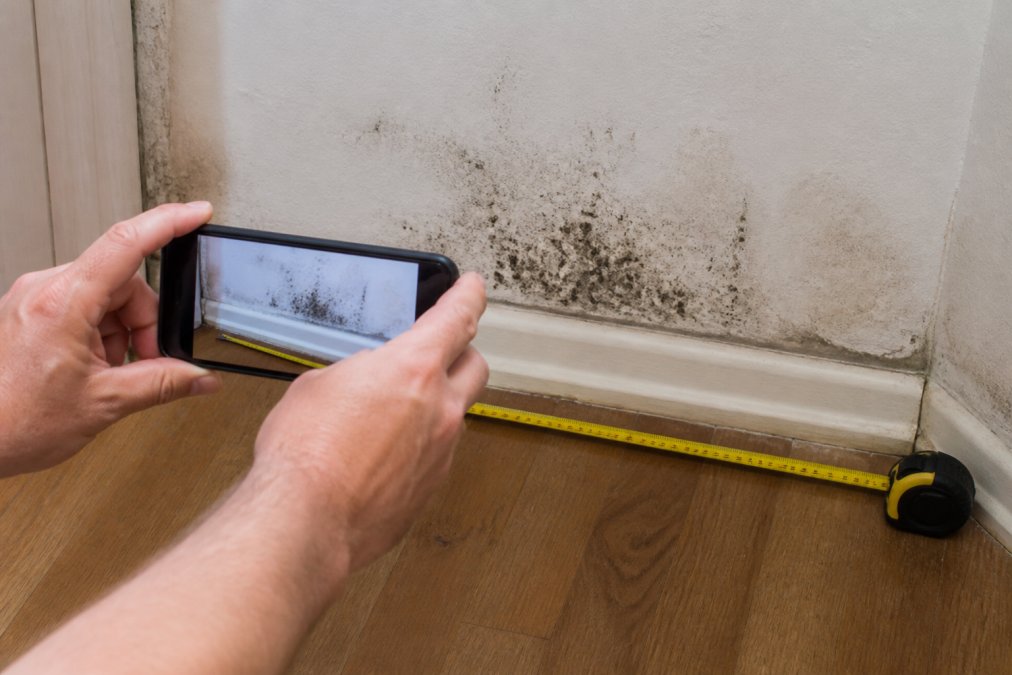
Do not clean or remove the mold before documenting it. Once you disturb the area, you lose the physical evidence, and the defense will argue the condition was never as severe as you claim. Photograph first, then seek professional remediation.
Step 2: Seek Medical Evaluation and Preserve Health Records
See a physician as soon as symptoms appear, even if they seem mild. A medical evaluation creates an official record connecting your symptoms to a specific timeframe, which is essential for proving causation. Tell your doctor about the mold exposure explicitly so they note it in your chart.
Request copies of all test results, including blood work, allergy panels, and pulmonary function tests. The Centers for Disease Control and Prevention information on mold and health notes that mold exposure can trigger respiratory issues and allergic reactions, making these records directly relevant to your claim. Keep every bill, prescription receipt, and appointment record organized in one folder.
Step 3: Understand the Link Between Mold and Neurological Issues
Can mold cause neurological health issues? This question is increasingly central to mold litigation. While respiratory symptoms are the most common complaints, many plaintiffs report cognitive difficulties, memory problems, and mood changes they attribute to mold exposure.
Medical experts in these cases often testify about mycotoxins and their potential effects on the nervous system. If you experience headaches, brain fog, difficulty concentrating, or unexplained anxiety, document these symptoms in your journal even if they seem subjective. Defense attorneys will challenge these claims, so consistent documentation is crucial.
Neurological symptoms are harder to prove than respiratory ones, but they can significantly increase damages. Track them meticulously, and be prepared for the defense to question whether stress or other factors caused them.
Step 4: Professional Testing vs. DIY Kits for Your Mold Exposure Lawsuit
Home testing kits are readily available, but their results rarely hold up in litigation. A mold exposure lawsuit requires evidence that meets legal standards, and DIY kits typically fail that test because they lack chain-of-custody documentation and scientific rigor.
Professional testing involves certified industrial hygienists who take air samples, surface samples, and bulk samples following established protocols. They document spore counts and identify specific mold species, creating a report that expert witnesses can defend in court.
| Testing Method | Evidence Value | Best Use |
|---|---|---|
| DIY kit | Low, rarely admissible | Initial screening only |
| Professional air sampling | High, court-admissible | Establishing exposure levels |
| Professional surface sampling | High, court-admissible | Identifying specific species |
| Moisture mapping | Medium, supports other evidence | Showing water intrusion source |
Step 5: The Toxic Mold Litigation Process Explained
The toxic mold litigation process follows a predictable path once you retain counsel. Here is how a typical case unfolds, from the first filing through trial.
The demand letter and pre-suit negotiation
Before your attorney files a complaint, most firms send a demand letter to the defendant, usually the landlord, property manager, or employer, and their insurance carrier. This letter outlines your injuries, the property conditions, the evidence you have gathered, and a settlement demand. Do not sign any medical release without your attorney reviewing it; overly broad authorizations can give the defense access to unrelated health records.
Filing the complaint and the defendant’s response
If pre-suit negotiation fails, your attorney files a complaint in the appropriate state or federal court. The complaint names the defendant and asserts legal theories such as negligence, breach of the implied warranty of habitability, or violation of state landlord-tenant statutes. The defendant typically has 21 to 30 days to file an answer or a motion to dismiss.
Discovery: where mold cases are won or lost
Discovery is the most intensive phase and often determines whether your case settles or proceeds to trial. Both sides exchange written interrogatories, requests for production of documents, and requests for admission. You will likely be asked to produce every piece of evidence you have gathered: photographs, symptom journals, medical records, testing reports, and correspondence with the property owner.
Depositions are a critical component. You will sit for a deposition where the defense attorney questions you under oath about your symptoms, your daily activities, and your interactions with the property owner. Expect the defense to challenge the credibility of your symptom journal and the timing of your medical visits, this is why consistent documentation from the first 72 hours matters so much. preventing mold buildup.
Expert witnesses and their roles
Both sides typically retain expert witnesses in mold litigation. The plaintiff’s experts often include:
- Certified industrial hygienists who conducted the environmental testing and can testify about the mold species identified, spore counts, and whether the levels exceeded recognized exposure guidelines.
- Physicians who specialize in environmental or occupational medicine and can opine on the causal link between your exposure and your symptoms.
- Economists or vocational experts who quantify lost wages, diminished earning capacity, and future medical costs.
The defense will retain their own experts to challenge your experts’ methodology and conclusions. Under the federal standard established in Daubert v. Merrell Dow Pharmaceuticals, courts may exclude expert testimony that is not scientifically reliable. Your attorney must ensure your experts’ methods meet this standard, DIY kits rarely survive a Daubert challenge.
Motions, settlement conferences, and trial
After discovery closes, either side may file motions for summary judgment, asking the judge to rule that the evidence is insufficient to support a claim or defense. If the case survives, the court will likely order a settlement conference, where a neutral mediator helps both sides negotiate. Many mold cases settle at this stage because the costs of trial create pressure on both parties.
If no settlement is reached, the case proceeds to trial. The burden of proof rests on you as the plaintiff: you must show by a preponderance of the evidence that the defendant knew or should have known about the mold, failed to address it, and that this failure caused your injuries. A jury verdict can take anywhere from a few days to several weeks to reach.
Discovery is not a formality, it is the phase where cases are won or lost. Be prepared to produce every document you have, and do not discard anything, even if it seems insignificant. Inconsistent statements or missing records can be used to undermine your credibility.
Most mold cases settle before trial, but the strength of your evidence directly influences the settlement offers you receive.
Step 6: Know the Mold Exposure Settlement Timeline and Damages
A mold exposure settlement timeline varies widely depending on case complexity, the severity of injuries, and whether the defendant cooperates. Simple cases with clear liability might resolve in six to twelve months, while contested cases involving neurological claims or multiple defendants can take two to three years or longer.
The realistic timeline by case type
| Case Type | Typical Timeline | Key Variables |
|---|---|---|
| Clear liability, minor property damage | 6-12 months | Insurance cooperation, straightforward remediation records |
| Respiratory injuries, contested causation | 12-24 months | Expert witness availability, medical record complexity |
| Neurological or multi-defendant claims | 24-36+ months | Daubert challenges, multiple depositions, scientific testimony |
Cases that go to trial add six to twelve months on top of the discovery phase.
Types of damages in mold litigation
Compensatory damages in mold litigation fall into several categories:
- Medical expenses: Past and future costs for doctor visits, specialists, prescription medications, allergy treatments, pulmonary function tests, and any ongoing care. Keep every bill and explanation of benefits.
- Property damage: Costs to remediate the mold, replace contaminated belongings (furniture, clothing, mattresses), and repair the underlying water intrusion. Professional remediation estimates and receipts are essential.
- Lost wages: Income you lost due to medical appointments, illness-related absences, or time spent relocating. Documentation from your employer and your symptom journal creates the necessary link.
- Pain and suffering: Non-economic damages for physical discomfort, emotional distress, and loss of enjoyment of life. States vary in how they calculate these damages, but your symptom journal and any mental health records are critical evidence.
- Punitive damages: Available only when the defendant acted with recklessness, fraud, or intentional misconduct, for example, a landlord who concealed a known mold problem or an employer who ignored repeated complaints. Punitive damages are capped in many states and are not covered by most insurance policies, meaning the defendant pays them personally.
Settlement ranges and what they reflect
Settlement amounts in mold cases vary dramatically. Small claims involving minor property damage and transient respiratory symptoms may settle for $5,000 to $25,000. Cases with documented, ongoing health effects and significant property loss often settle in the $50,000 to $250,000 range. The largest verdicts and settlements, those exceeding $1 million, typically involve severe, permanent injuries, neurological damage, or egregious conduct by the defendant. The strength of your medical causation evidence is the single largest factor in settlement value.
Post-settlement tax implications: what you need to know
A critical issue most guides ignore is how your settlement is taxed. Under Internal Revenue Service rules, compensation for physical injuries or physical sickness is generally excluded from gross income. However, several portions may be taxable:
- Punitive damages are always taxable, regardless of the underlying claim.
- Lost wages are taxable because they replace income you would have earned.
- Interest earned on the settlement after the judgment is taxable.
- Emotional distress damages are taxable unless they are tied to physical symptoms or physical injury.
The settlement agreement must allocate the award among these categories, and that allocation has direct tax consequences. Your attorney should work with a tax professional to structure the settlement properly.
Before signing any settlement agreement, ask your attorney how the award will be allocated between taxable and non-taxable categories. A poorly structured settlement can leave you with a significant tax bill you did not anticipate.
Settlement agreements also typically require you to release the defendant from all future claims related to the mold exposure. If your condition worsens or new symptoms emerge later, you cannot pursue additional compensation. Review the release language carefully with counsel.
Step 7: When to Consult an Attorney and What to Bring
Consult an attorney as soon as you have basic documentation, ideally before any remediation occurs. Most personal injury firms offer free consultations on a contingency-fee basis, meaning you pay nothing unless you recover compensation.
Bring everything you have gathered: photographs, symptom journal, medical records, testing reports, lease or employment documents, and any correspondence with the property owner or landlord. The American Bar Association resources on finding legal help can help you understand what to expect from an initial consultation. An experienced attorney will assess liability, estimate case value, and explain the realistic timeline for your situation.
Do not sign any waiver or settlement offer from an insurance company before consulting an attorney. Insurers often seek quick releases that limit your ability to claim future medical costs. A free case review protects your options.
Frequently Asked Questions
How hard is it to win a mold lawsuit?
Winning a mold lawsuit requires proving three elements: the property owner knew or should have known about the mold, they failed to fix it, and that failure directly caused your injuries. The hardest part is causation, showing the mold specifically caused your health problems. Strong documentation, professional testing, and medical records linking your symptoms to the exposure make the difference. An experienced mold exposure lawsuit attorney can help you meet this burden of proof.
What evidence is required to prove toxic mold exposure?
You need photographic evidence of visible mold, water intrusion documentation, professional air quality testing results showing elevated spore counts, and medical records connecting your symptoms to the exposure. Also preserve any written communication with your landlord or employer about the mold issue. A symptom journal with dates and severity helps establish the timeline. Expert witnesses often review this evidence to testify about causation and building code violations.
What is the statute of limitations for mold lawsuits in California?
In California, the statute of limitations for personal injury claims, including mold exposure, is generally two years from the date you discovered or reasonably should have discovered the injury. For property damage claims, the limit is typically three years. These deadlines are strict, and missing them bars your claim entirely. If you suspect mold exposure has harmed you, consult an attorney promptly to preserve your right to file.
Can mold cause neurological health issues that support a claim?
Research indicates that prolonged exposure to toxic mold can contribute to neurological symptoms such as memory loss, brain fog, headaches, and difficulty concentrating. These symptoms can support a claim when a physician documents them and links them to your exposure. Medical records showing cognitive decline or neurological issues strengthen your case and can increase compensatory damages. Your doctor’s opinion on causation is critical evidence in a mold exposure lawsuit.
Facing mold exposure is stressful, and the legal path adds another layer of uncertainty. At Abkarian Law Group, we guide clients through every stage of mold exposure lawsuits with personalized attention from senior attorneys and a 99% success rate on accepted cases. Our bilingual team is available 24/7, and we handle cases on a contingency basis so you face no upfront costs. Get a free consultation and take the first step toward protecting your health and your rights.